Why São Paulo's Green Tech Sector Stands Apart in the Global Clean Energy Race
As venture capital floods clean energy hubs worldwide, São Paulo's sugar-to-solar transition and tropical innovation culture are carving out a uniquely Brazilian path.
As venture capital floods clean energy hubs worldwide, São Paulo's sugar-to-solar transition and tropical innovation culture are carving out a uniquely Brazilian path.
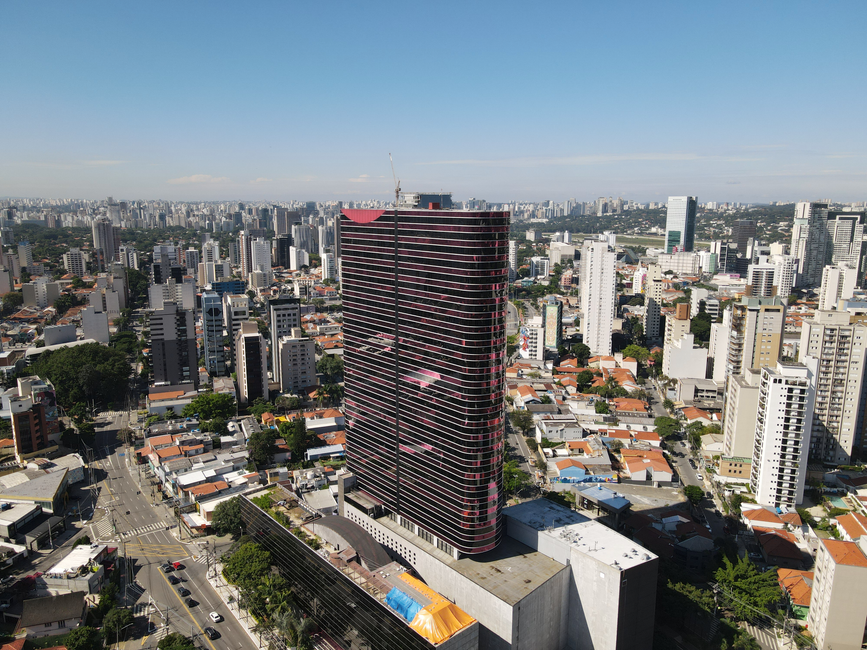
São Paulo's clean energy ecosystem occupies a peculiar sweet spot in the global green tech landscape. While Silicon Valley chases lithium batteries and Copenhagen perfects wind turbines, Brazil's largest city is leveraging something far more distinctive: a 500-year-old agricultural legacy being systematically reimagined through sustainable technology.
The region's sugarcane industry—historically one of the world's largest ethanol producers—has become a testing ground for circular economy innovation. Researchers at USP's Institute of Energy and Environment in Butantã are now turning bagasse (sugar residue) into advanced biofuels and biomaterials, attracting global clean tech investors who recognize that converting existing agricultural infrastructure beats building from scratch. This agricultural-to-tech bridge has no real equivalent in other major innovation hubs.
The numbers underscore the opportunity. São Paulo accounts for roughly 12% of Brazil's renewable energy patents, yet the city hosts nearly 35% of the country's clean energy venture funding. Last year, startups in the Pinheiros and Vila Mariana neighborhoods raised approximately $280 million in green tech rounds—modest by Silicon Valley standards, but representing a 40% year-over-year surge that suggests momentum few Western cities are experiencing.
What distinguishes São Paulo's approach is pragmatism born from necessity. With electricity costs in Brazil hovering around R$0.80 per kilowatt-hour (roughly double Germany's rates), companies here aren't pursuing clean energy as virtue signaling. They're pursuing it as competitive advantage. This creates a different breed of entrepreneur—less ideological, more ruthlessly focused on unit economics.
Infrastructure plays a role too. The industrial corridors along the Pinheiros River and extending toward ABC (Santo André, São Bernardo do Campo, São Caetano) house manufacturing ecosystems with minimal green tech precedent elsewhere. A company building solar components doesn't just find venture capital here; it finds supply chains, logistics networks, and industrial partners already optimized for scale.
The talent pipeline differs as well. While European cities compete for PhD-holders, São Paulo draws young engineers fleeing economic uncertainty across Latin America. They're hungry, affordable, and accustomed to improvising solutions in resource-constrained environments—exactly the mindset clean energy deployment in developing nations requires.
Yet São Paulo remains underestimated internationally. Global climate finance still flows predominantly toward established clusters in California, Berlin, and Copenhagen. For investors willing to look beyond familiar geographies, São Paulo's combination of agricultural industrial heritage, tropical climate urgency, manufacturing pedigree, and hungry talent represents perhaps the world's most overlooked green tech opportunity.
This article was compiled by AI from the sources linked above and screened before publishing. See our editorial standards.
How does this story make you feel?
Spread the word
About this article
Published by The Daily São Paulo
Daily brief
Free, in your inbox before 7am. Weekdays.
More in tech