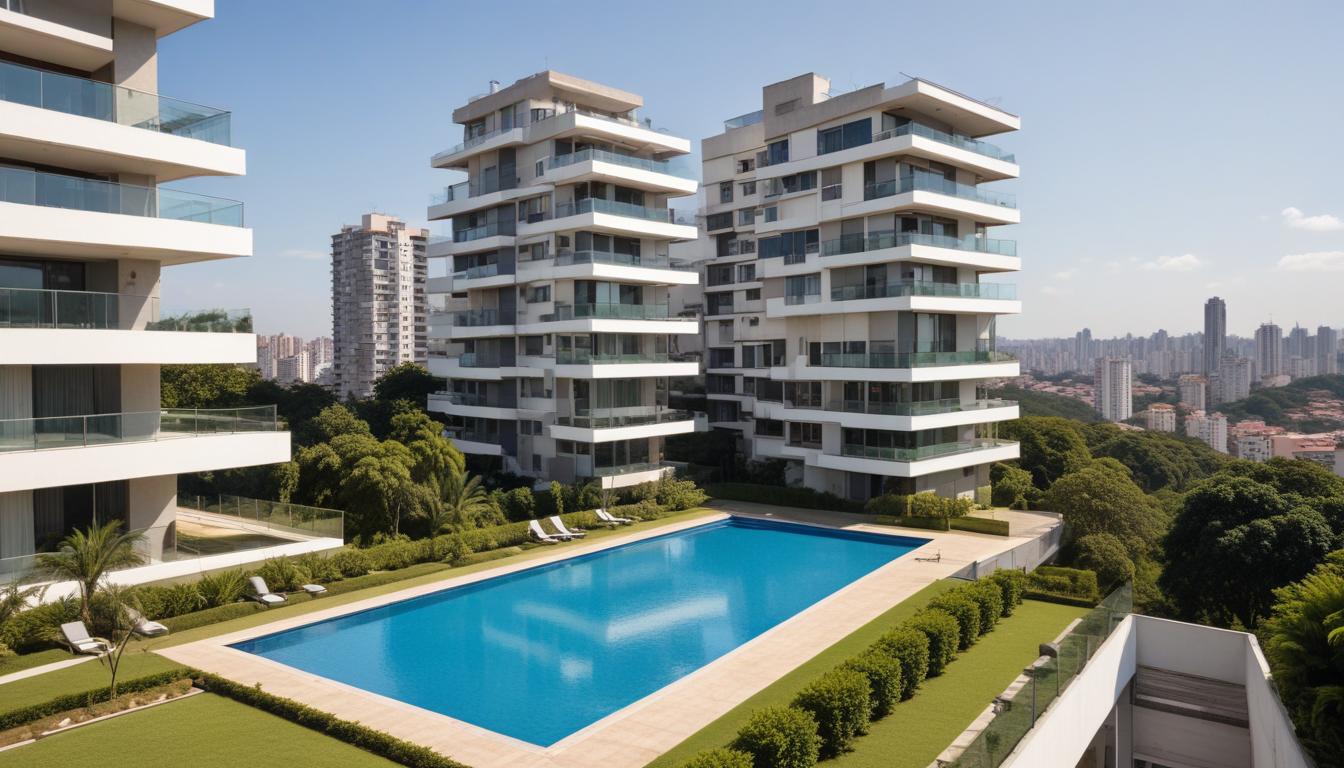
São Paulo's luxury property market is experiencing a pronounced realignment as major new residential projects reshape the geography of prestige. With average prices across the city hovering around BRL 10,000 per square metre, the emergence of trophy developments in established strongholds like Itaim Bibi and the secondary surge in Pinheiros is creating a clear bifurcation between traditional power zones and emerging aspirational addresses.
The past 18 months have seen institutional investors and private developers commit substantial capital to ultra-high-end projects in Itaim Bibi, where penthouses and full-floor apartments now regularly exceed BRL 50 million. These aren't incremental additions to the neighbourhood's existing stock—they represent a deliberate repositioning of the area as São Paulo's answer to global luxury benchmarks. Projects featuring private spas, wine cellars, and gallery-scale living spaces are attracting attention from Brazilian wealth concentrated in finance, agribusiness, and technology sectors.
Yet the momentum isn't contained to traditional strongholds. Pinheiros, long positioned as affluent but not ostentatious, is experiencing developer interest that suggests a maturation of its market positioning. New mixed-use developments integrating luxury residences with curated retail and dining are beginning to compete directly with Jardins for the attention of high-net-worth buyers seeking something less overtly formal than established addresses near Avenida Paulista.
What's particularly notable is how these new projects function as anchors for neighbourhood transformation. The arrival of a prestige development doesn't merely add units—it signals confidence to complementary businesses. Interior designers, private banking facilities, and high-end hospitality increasingly cluster around these new developments, effectively amplifying their cultural and economic gravitational pull.
Vila Madalena's continued evolution as a creative and lifestyle destination has attracted smaller-scale luxury projects targeting a demographic that values proximity to galleries, independent restaurants, and cultural venues over square-footage maximisation. Meanwhile, growth corridors in Tatuapé and Mooca, while still positioned well below the BRL 15,000+ per-square-metre premium pricing, are drawing investor attention as potential future consolidation zones.
The trajectory suggests São Paulo's luxury property landscape is becoming simultaneously more concentrated and more dispersed—concentrated around flagship new developments that function as market anchors, yet dispersed across an expanding geography as wealth gravitates toward lifestyle attributes beyond postcode prestige. For investors and owner-occupiers alike, the next cycle will reward those who recognise that new development projects aren't simply adding supply; they're redefining what luxury location means in a city as complex as São Paulo.
This article was compiled by AI from the sources linked above and screened before publishing. See our editorial standards.