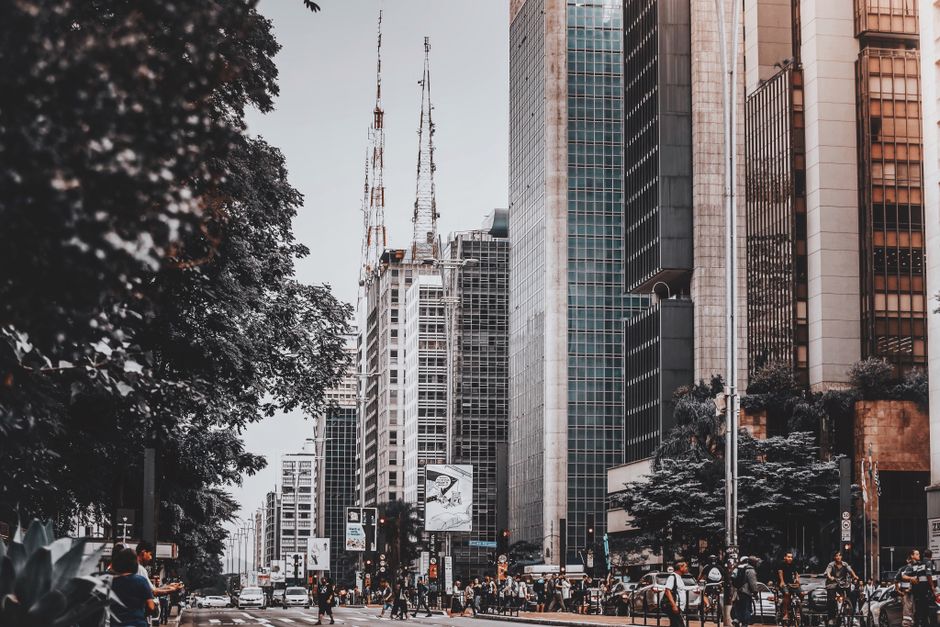
The City of São Paulo will require all new commercial construction above 2,500 square metres to meet updated green certification standards starting January 2027, under rules approved by the Municipal Secretariat of Urban Development in late June. The measure is the most concrete step yet under the Plano de Ação Climática 2025-2030, a framework Mayor Ricardo Nunes signed last December promising to cut municipal greenhouse gas emissions 35 percent below 2005 levels within four years.
The timing is not accidental. Europe is burying more than 2,000 people killed by a single heatwave this summer. Venezuela is counting earthquake dead in improvised morgues. Closer to home, flooding in West Africa has left dozens dead after rains that climate scientists say are growing more intense year on year. São Paulo, a metropolitan region of 22 million people sitting on an already stressed watershed, is watching all of it and drawing conclusions. The city's drainage crisis, which left Avenida do Estado underwater for three consecutive days in March, gave political urgency to what had been largely bureaucratic language.
What the Targets Actually Mean on the Ground
For residents in Pinheiros, the changes are already visible. The Secretaria Municipal do Verde e do Meio Ambiente expanded the Programa Cidade Jardim in April, planting 14,000 native trees along Rua Teodoro Sampaio and a six-block stretch of Rua Harmonia, part of a broader commitment to add 100,000 trees across the city by December 2026. The trees are not decorative: the programme calculates each mature native specimen reduces localised temperatures by up to 4 degrees Celsius in a 30-metre radius, a figure the secretariat draws from monitoring data collected in Parque do Ibirapuera over two consecutive summers.
The Billings and Guarapiranga reservoirs, which supply drinking water to roughly 4.5 million people in the southern zone, are also central to the plan. SABESP, the state water company, committed R$1.2 billion through 2028 to reduce sediment load and expand riparian vegetation buffers around both reservoirs. That money will fund work across a dozen municipalities in Greater São Paulo, not just the capital.
In Capão Redondo, the picture is messier. The neighbourhood sits in the southern periphery, roughly 25 kilometres from Paulista Avenue, and residents there say the green agenda has so far delivered more bus fare increases than tree cover. SPTrans raised the base bus fare to R$5.00 in May, citing operational costs that include transitioning part of the fleet to electric vehicles. Thirty electric buses are currently running on three routes in the northern zone; zero operate in the southern periphery. The Instituto Pólis, a São Paulo-based urban policy organisation, published a report in June noting that 73 percent of the electric bus routes announced through 2025 were concentrated in districts with above-median household incomes.
Who Pays, and Who Waits
The new commercial construction rules will generate certification fees that feed directly into the Fundo Municipal de Mudança do Clima, established in 2021. The fund had R$48 million in it as of March 2026, enough, by the secretariat's own estimate, to retrofit approximately 200 social housing units with solar panels. The city's social housing stock, managed by COHAB-SP, runs to roughly 280,000 units. The arithmetic is uncomfortable.
Residents who want to track where the money goes have a new tool: the Painel Clima SP dashboard, launched on the Prefeitura website in May, allows anyone to monitor tree planting totals, reservoir levels, and electric fleet deployment by district in near real time. Neighbourhood associations in Vila Mariana and Santana have already started using the data to challenge budget allocations at monthly Câmara Municipal public hearings.
That kind of accountability pressure may matter more than any single programme. The next major checkpoint comes in October, when the secretariat must submit its first annual progress report under the climate plan to the city council. Residents in every corner of São Paulo, from Higienópolis to Grajaú, will have the numbers in hand when that report lands.