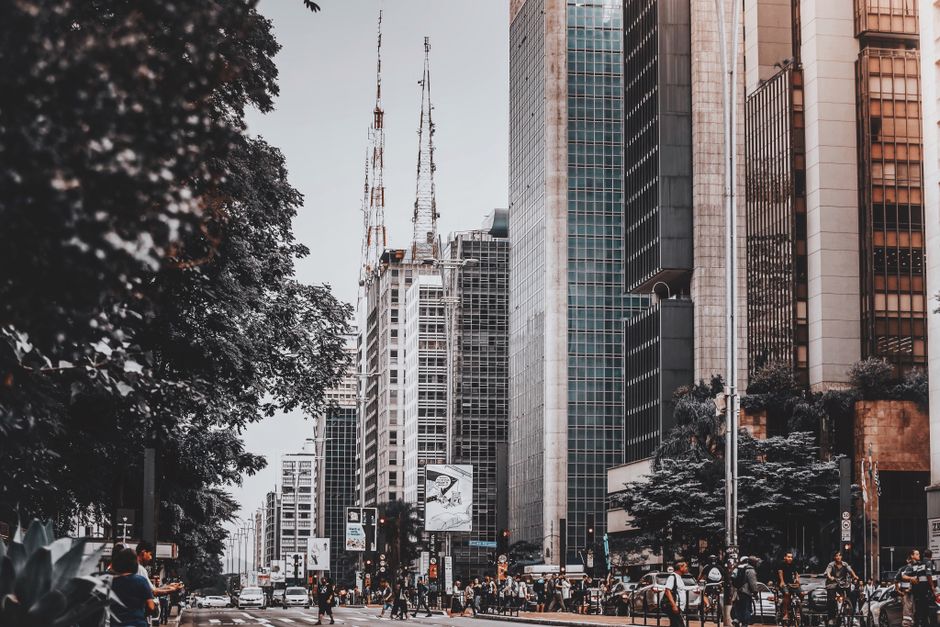
The numbers alone are striking. São Paulo's state government is pumping R$18 billion into the expansion of the metro network over the next four years, a capital program that will add roughly 40 kilometers of new track and 25 stations to a system that already carries 5.7 million passengers every weekday. For a city where the average commuter loses nearly 2.5 hours a day to traffic, the expansion is less a municipal project than a public health intervention.
The timing is not accidental. São Paulo's urban mobility crisis has been grinding toward a breaking point. The Marginal Pinheiros regularly ranks among the most congested corridors in Latin America, and bus overcrowding in peripheral neighborhoods like Itaquera and Campo Limpo has been catalogued in annual reports by SPTrans, the city's surface transit authority, for the better part of a decade. The state government of Tarcísio de Freitas signed the latest tranche of federal financing agreements with Brasília in May, unlocking R$4.2 billion tied to Lula administration infrastructure funds, money that had been stalled in negotiations since late 2024.
Which Lines, Which Neighborhoods
The buildout centers on three corridors. Line 6-Orange, running from Brasilândia in the far north down through Higienópolis and on to São Joaquim, is furthest along, civil works on the tunnel sections beneath Avenida Angélica are expected to conclude by the third quarter of 2027. Line 17-Gold, the elevated monorail that will eventually connect Morumbi to Congonhas Airport and then out to São Paulo-Guarulhos via a transfer point, has its first operational segment penciled in for a December 2026 inauguration, though contractors and state officials have given that date cautious treatment given past delays. Line 20-Rosa, still largely in the engineering phase, would eventually serve the ABC Paulista industrial municipalities of Santo André and São Bernardo do Campo, whose residents currently depend almost entirely on CPTM commuter rail or private cars.
For communities like Brasilândia, a neighborhood of roughly 280,000 people in the Zona Norte that has never had rail access of any kind, Line 6 represents something more fundamental than convenience. Residents there currently face bus journeys of up to 90 minutes just to reach a metro connection at Palmeiras-Barra Funda. A direct tube ride into the center would cut that to under 30 minutes. Property analysts at Lello Imóveis have already tracked a 14 percent rise in median apartment prices within 800 meters of planned Line 6 stations over the past 18 months, pricing out some of the lower-income families the expansion was partly designed to benefit.
What Residents Should Actually Expect
The Metrô state company has opened public consultation offices at two locations, inside the Paulista shopping mall on Avenida Paulista and at the Tatuapé terminal building, where affected residents can review displacement plans and compensation frameworks. Roughly 1,100 families living directly above the Line 6 tunnel route have been formally notified of potential property acquisition proceedings, according to documents filed with the state's Secretaria dos Transportes Metropolitanos in April.
Bus routes operated by SPTrans are scheduled to be progressively rerouted as new stations open, which means commuters in Higienópolis, Santa Cecília, and parts of Perdizes should expect surface route changes starting no earlier than mid-2027. The agency has committed to publishing updated route maps 90 days before any modification takes effect, a policy that did not exist during the chaotic Line 4-Yellow opening in 2010, when thousands of riders found their connecting buses had vanished without notice.
For now, the practical advice is simple: if you live or work within a kilometer of a planned Line 6 or Line 17 station, start tracking construction progress through the Metrô's official site and attend the monthly community meetings the secretariat has scheduled through December. São Paulo has broken ground on big metro promises before and missed deadlines by years. This round of financing is more structured than previous efforts, but the city's concrete is still being poured.