São Paulo's municipal government signed three separate green partnership agreements on Wednesday, accelerating a decarbonization agenda that has been stalled in bureaucratic review since late 2024. The deals, formalized at a ceremony inside the Secretaria Municipal de Urbanismo e Licenciamento on Rua São Bento, commit the city to measurable emissions reductions across its bus fleet, building stock and solid waste operations before the end of this decade.
The timing is pointed. Europe is in the grip of a deadly heatwave that killed more than 2,000 people in France alone at its peak, and cities across the Global South are under increasing pressure from multilateral financiers to demonstrate credible climate plans before accessing low-interest green bonds. São Paulo, which accounts for roughly 11 percent of Brazil's total GDP and sits inside the Macrometropole Paulista, home to 33 million people, cannot afford to be seen as dragging its feet.
What the Deals Actually Cover
The most significant agreement is with the Inter-American Development Bank, which will extend a R$1.4 billion credit line tied to the expansion of the BRT Expresso Tiradentes corridor in the Zona Leste. The funds are conditioned on São Paulo retiring at least 800 diesel buses from the SPTrans fleet by December 2027 and replacing them with electric or biomethane-powered vehicles. The Expresso Tiradentes already carries around 200,000 passengers a day along its 22-kilometre route between Artur Alvim and the Parque Dom Pedro II terminal in the Centro Histórico.
The second deal involves Ecovias, the concessionaire that operates the Anchieta-Imigrantes system, and a São Paulo-based cleantech startup called Verde.ai, headquartered in the Butantã tech cluster near the Universidade de São Paulo campus. Verde.ai will install real-time emissions sensors on 14 toll plazas to build a continuous air-quality data feed that the Secretaria do Verde e do Meio Ambiente can use to trigger vehicle restrictions during pollution spikes. The pilot runs through June 2027.
The third agreement is the most locally rooted: a formal partnership with the Cooperativa de Catadores Recicla Grajaú, which operates sorting facilities in Grajaú, one of the southernmost and most flood-vulnerable districts in São Paulo. Under the deal, the cooperative gets direct contracts with four municipal agencies to process organic waste diverted from Aterro Bandeirantes, the city's largest landfill in Perus, in the Zona Norte. Aterro Bandeirantes currently emits an estimated 2.3 million cubic metres of methane per year, according to figures from CETESB, the state environmental agency.
The Numbers Behind the Ambition
São Paulo's official inventory puts the city's total greenhouse gas emissions at approximately 61 million tonnes of CO₂ equivalent per year, with transport responsible for 37 percent of that total. The municipal Climate Action Plan, updated in 2023 under the administration of then-mayor Ricardo Nunes, commits the city to a 45 percent reduction in emissions by 2035 and full carbon neutrality by 2050. Wednesday's announcements represent the first concrete financing attached to those targets since the plan was published.
The Secretaria Municipal de Finanças confirmed that São Paulo will issue its first sovereign green bond, denominated in reais, not dollars, in the third quarter of 2026, targeting institutional investors on the B3 exchange on Avenida Brigadeiro Faria Lima. The bond is expected to raise between R$800 million and R$1.2 billion, according to documents circulated to creditors earlier this month.
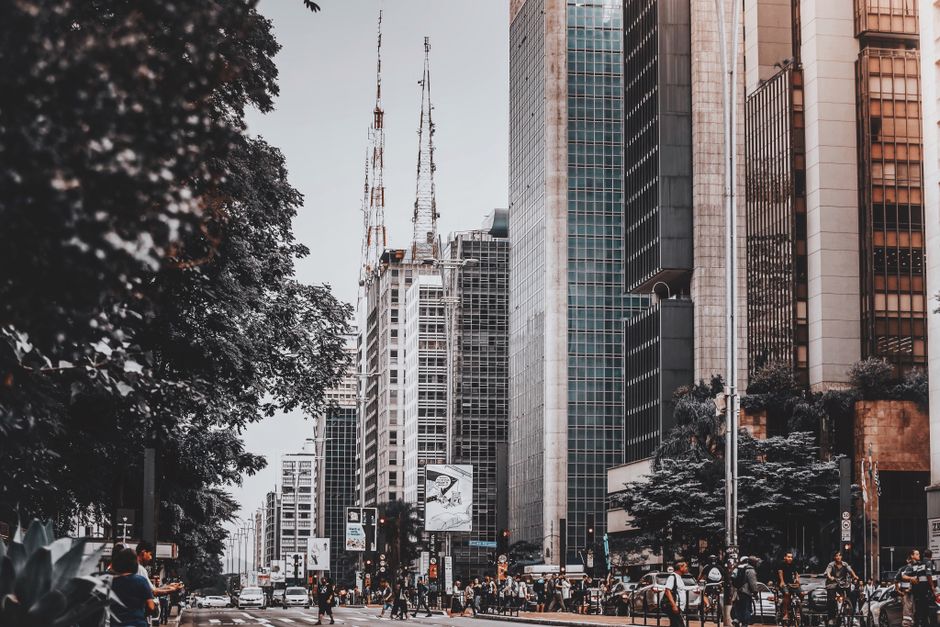
For residents, the practical near-term change will be visible on the Tiradentes corridor and, eventually, on air quality readings around Avenida Paulista and Largo do Arouche, two of the city's most congested pedestrian and protest arteries. The Verde.ai sensor network is designed to feed data directly into the city's Painel Clima SP dashboard, which is publicly accessible and was redesigned in May 2026. Environmental groups including SOS Mata Atlântica, based in Pinheiros, have already requested formal access to the raw data feeds. City Hall says it will respond to that request by the end of July.