São Paulo Housing Crisis: 1.9M Unit Deficit Exposed
Data from FGV reveals São Paulo's housing deficit reaches 1.9 million units. Favela expansion accelerates in Brasilândia and Sapopemba as formal housing development stalls.
Data from FGV reveals São Paulo's housing deficit reaches 1.9 million units. Favela expansion accelerates in Brasilândia and Sapopemba as formal housing development stalls.
Listen to this article · 3:36
Behind every shuttered storefront on Avenida Paulista and every makeshift favela expansion in the eastern suburbs lies a story told most honestly through numbers. São Paulo's housing crisis has reached a critical inflection point, and the data tells a story the city's planners can no longer ignore.
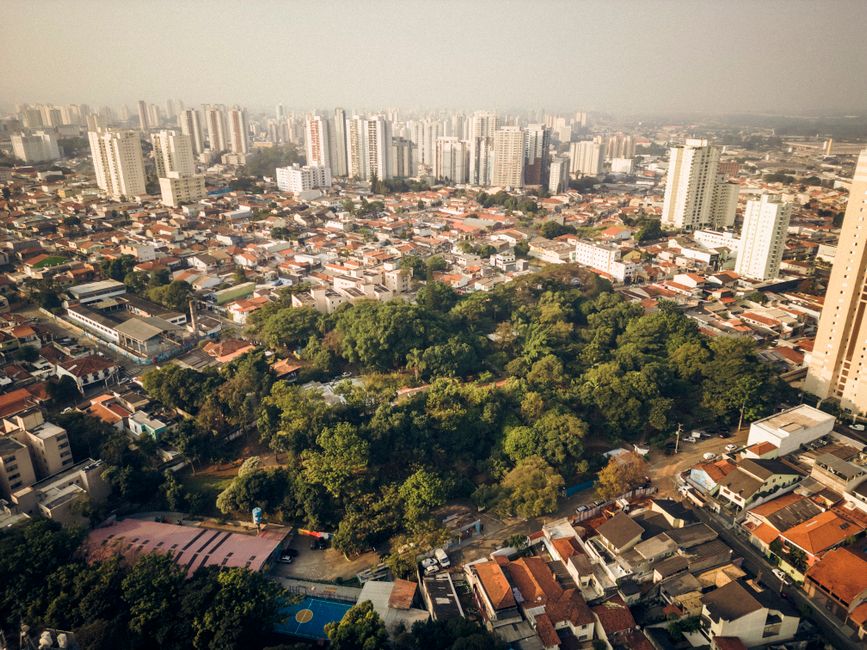
The metropolitan region's housing deficit now stands at approximately 1.9 million units, according to consolidated figures from the Fundação Getulio Vargas and the Associação das Administradoras de Imóveis. That staggering number represents not abstract policy failure, but actual families. In neighborhoods like Brasilândia and Sapopemba on the city's periphery, informal settlements have grown by 18 percent over the past five years alone—far outpacing any formal housing development in those same areas.
Price inflation tells its own cautionary tale. Average residential property values in Pinheiros have climbed to R$15,000 per square meter, while comparable units in less central zones like Itaquera hover around R$4,500—a threefold disparity that effectively locks middle-income earners out of desirable neighborhoods entirely. For renters, the squeeze is even more severe: median monthly rent in Vila Madalena now consumes approximately 38 percent of household income for a two-bedroom apartment, well above the internationally recommended threshold of 30 percent.
The data becomes more troubling when examining construction starts. The Sindicato da Habitação registered just 47,200 new housing units in 2025 across the greater metropolitan area—a 12 percent decline from 2024 and insufficient to absorb annual population growth estimated at 120,000 residents. City Hall's ambitious Porto Maravilha-style revitalization projects in neighborhoods like Mooca have generated headlines, yet delivered only marginal increases in affordable units.
Perhaps most revealing is the geographic concentration of recent development. Roughly 64 percent of all new residential construction since 2023 has clustered in five predominantly affluent districts: Pinheiros, Vila Mariana, Jardins, Consolação, and Tatuapé. Meanwhile, the 31 districts with populations exceeding 200,000 residents have attracted fewer than 12 percent of new housing investments.
These numbers sketch a portrait of a city that has forgotten its own spatial boundaries. Until São Paulo's housing policy begins reflecting the demographic reality rather than market preferences, the deficit will only deepen. The question is no longer whether intervention is necessary—the data settled that long ago. The question is whether the city will act before the numbers become even more damning.
This article was compiled by AI and screened before publishing. See our editorial standards.
How does this story make you feel?
Spread the word
About this article
Published by The Daily São Paulo
Daily brief
Free, in your inbox before 7am. Weekdays.
More in News