How São Paulo's Transport Crisis Built the Case for the Metro Expansion
Decades of underinvestment and mounting congestion have finally pushed the city to embrace ambitious new rail corridors.
Decades of underinvestment and mounting congestion have finally pushed the city to embrace ambitious new rail corridors.
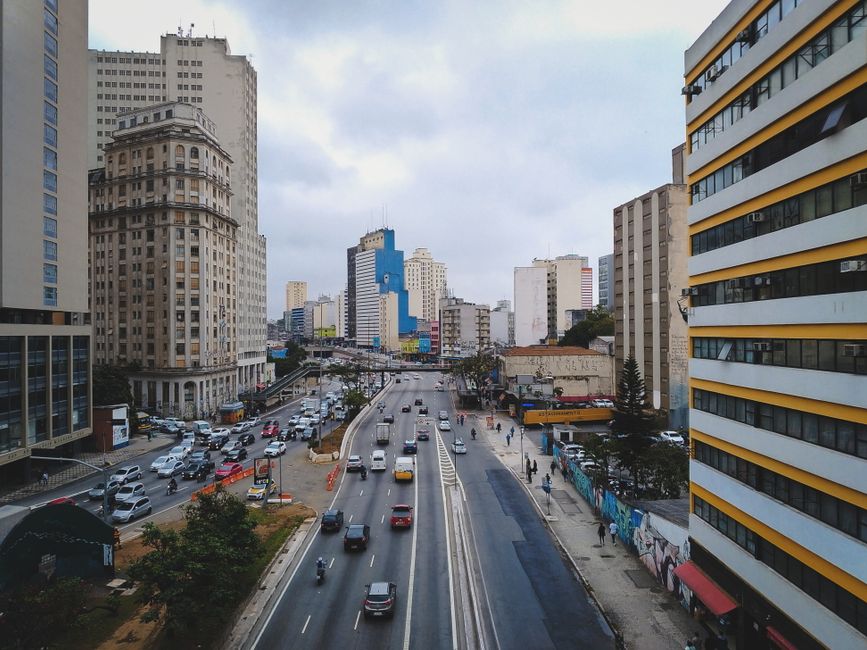
The morning gridlock on the Marginal Pinheiros has become as reliable as the sunrise. On any given weekday, commuters heading from Santo Amaro toward Pinheiros can spend two hours covering less than fifteen kilometers. It is a symptom of a chronic condition that has plagued São Paulo for generations: a transport infrastructure that has failed to keep pace with the city's explosive urban growth.
The roots of this crisis run deep into the 1980s and 1990s, when São Paulo's metro system—once celebrated as a model for Latin America—essentially stalled. While the city's population swelled from 8 million to nearly 12 million people, the metro added only two new lines in three decades. Meanwhile, the São Paulo Metropolitan Region's population surged to over 22 million, with most arriving via bus networks designed for a fraction of that demand.
By the early 2020s, the numbers had become impossible to ignore. The Brazilian Institute of Applied Economic Research documented that traffic congestion cost São Paulo's economy an estimated R$112 billion annually in lost productivity. The average commuter spent 2.5 hours daily in transit. Air quality indices regularly spiked as vehicles idled on congested arteries like Avenida Paulista and the Imigrantes Highway.
The breaking point came with the 2024 floods that exposed the fragility of surface transport. When rainfall overwhelmed drainage systems across the city's periphery, bus routes collapsed and tens of thousands were stranded. The disaster crystallized a political reality: continued reliance on road-based transport had become untenable.
This convergence of factors—fiscal pressure from congestion, environmental degradation, and the spectre of climate-induced disruptions—created the political opening for ambitious rail expansion. The proposals now advancing include extensions toward Guarulhos, a dedicated corridor serving the ABC municipalities, and improvements to the Cptm regional network that serves satellite towns like Osasco and Taboão da Serra.
What made this possible was a shift in how city planners and policymakers framed the problem. Rather than debating whether São Paulo needed better transport, the conversation turned to cost-benefit analysis: the price of inaction had become visibly higher than the price of investment.
The timeline remains ambitious but realistic. Completion of key corridors is targeted for 2030-2032. For commuters currently suffering through peak-hour crawls, the wait represents both promise and challenge—proof that infrastructure change, however delayed, remains possible in a city of São Paulo's scale and complexity.
This article was compiled by AI from the sources linked above and screened before publishing. See our editorial standards.
How does this story make you feel?
Spread the word
About this article
Published by The Daily São Paulo
Daily brief
Free, in your inbox before 7am. Weekdays.
More in News