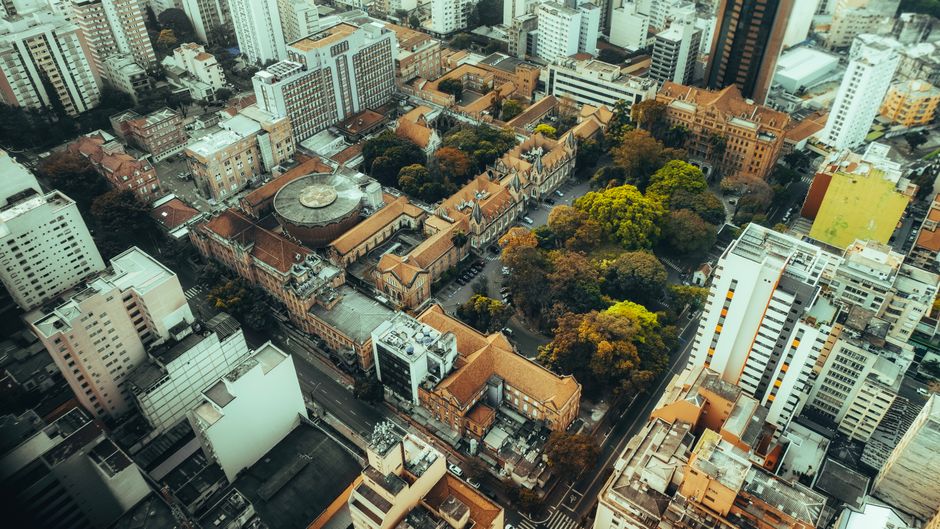
Walk through Pinheiros on any weekday morning and you'll spot the unmistakable yellow vests of delivery cyclists weaving through traffic—a visible reminder of how deeply startup technology has embedded itself into São Paulo's rhythms. But the transformation runs far deeper than logistics.
The venture capital flowing into São Paulo's ecosystem—Brazil's tech sector attracted over $2.3 billion in VC funding last year, with the state capturing roughly 60 percent—is solving hyperlocal problems that directly affect millions. A resident in Itaquera no longer waits three weeks for a medical appointment; fintech-backed health platforms now connect them with specialists in Pinheiros within days. A small vendor in the 25 de Março district manages inventory through AI-powered software costing a fraction of traditional enterprise systems. Parents in Zona Leste use subsidized edtech apps developed by startups that received Series A funding.
The impact is tangible in neighborhoods where it matters most. In Vila Mariana and Mooca, mobility startups have reduced average commute times by reshaping how residents coordinate travel. Real estate tech companies have made property searches transparent in a market historically opaque and favor-driven. Micro-credit platforms, funded by impact investors, now serve informal workers across the periphery—people previously invisible to traditional banks.
Yet this democratization isn't accidental. São Paulo's venture ecosystem—anchored by institutions like FINEP and hubs in Vila Madalena and Brás—has explicitly prioritized ventures addressing inequality. When a startup scales from Av. Paulista to neighborhoods like Sapopemba, the math changes: unit economics that work in wealthy enclaves often collapse when serving working-class districts. Investors have learned this requires different capital structures, longer runways, and deeper local knowledge.
The numbers reveal the shift. Between 2022 and 2024, 34 percent of VC capital flowed to companies explicitly targeting middle and lower-income consumers—triple the proportion from five years prior. Healthcare, financial inclusion, and education startups now represent the largest share of early-stage funding.
For daily residents, this means the city's oldest challenge—that vast inequality creating parallel economies—is being methodically chipped away by market forces. A domestic worker using a gig platform in Diadema. A student in Itapecerica da Serra accessing quality tutoring. An elderly resident in Tatuapé receiving preventative care through a telehealth startup.
São Paulo's startup ecosystem wasn't born from altruism. But as capital has matured, it's discovered that solving problems for the many is more scalable—and ultimately more profitable—than serving the few. For millions of residents, that realization is already changing everything.
This article was compiled by AI and screened before publishing. See our editorial standards.