Why São Paulo's AI Ecosystem Is Playing in a League of Its Own
From Paulista Avenue to the Zona Sul, a combination of scale, talent density, and regulatory pragmatism is making Brazil's largest city a genuinely distinct force in global tech.
From Paulista Avenue to the Zona Sul, a combination of scale, talent density, and regulatory pragmatism is making Brazil's largest city a genuinely distinct force in global tech.
São Paulo surpassed Singapore and Stockholm this year to rank seventh globally in the 2026 Global AI Readiness Index compiled by Oxford Insights — the highest any Latin American city has ever placed. That number, published in June, landed quietly in the middle of a busy global news week, but inside the city's tech community it landed like a thunderclap.
The ranking reflects something that practitioners here have watched build for years: a tech ecosystem that runs not just on venture money and government promises, but on structural advantages that most competitor cities cannot easily replicate. The concentration of engineering graduates, the sheer size of the domestic consumer market — 215 million Brazilians, most of them smartphone users — and a regulatory posture from Brasília that has been permissive without being reckless. São Paulo's moment is arriving precisely as cities everywhere are scrambling to define what "smart" actually means at municipal scale.
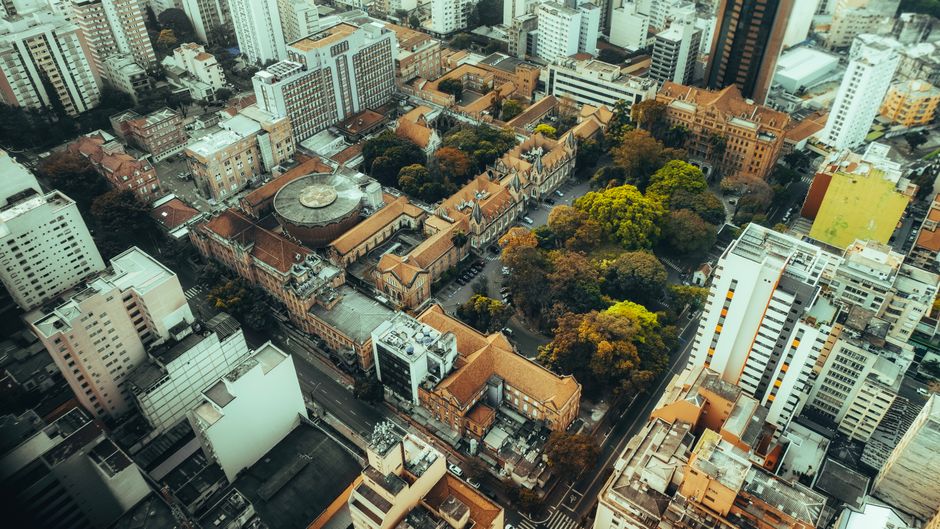
Walk down Rua Fidêncio Ramos in Vila Olímpia on any given Tuesday morning and the density of AI-native companies becomes visceral. Totvs, Brazil's largest enterprise software company, consolidated its AI research operations there in 2025, embedding a 200-person machine-learning unit directly inside its product division. Two blocks away, Stefanini Group runs its Latin American AI lab out of a building that used to house a bank branch. The geography matters: Vila Olímpia and adjacent Berrini have become the functional equivalent of a mid-size Silicon Valley campus, but with bus lines and a metro stop at Faria Lima that the Valley has never managed to replicate at that density.
The city government's own Secretaria Municipal de Inovação e Tecnologia has been rolling out its Cidade Inteligente SP program since 2023, installing more than 4,200 smart sensors across the Centro Histórico and the Zona Norte to manage flood monitoring, traffic light sequencing, and public lighting — all feeding into a real-time urban dashboard that city planners at Viaduto do Chá headquarters use daily. The program's third phase, launching in the third quarter of 2026, expands the sensor network to Heliópolis and Paraisópolis, two of the city's largest favelas, a decision that signals an unusual commitment to ensuring that smart-city infrastructure doesn't stop at the boundaries of formal urbanity.
São Paulo produces roughly 53,000 STEM graduates annually from institutions including Universidade de São Paulo in Cidade Universitária and Instituto Tecnológico de Aeronáutica in nearby São José dos Campos. That pipeline feeds a startup ecosystem that raised R$4.2 billion in venture capital during the first half of 2026 alone, according to figures from the Brazilian Private Equity and Venture Capital Association released last month. Fintech and healthtech dominated, but AI-infrastructure deals — the picks-and-shovels layer of model training, data labeling, and inference hardware — accounted for nearly 18 percent of deal volume, up from 9 percent in the same period of 2024.
There is also a less-discussed structural edge: Portuguese. As global AI companies race to train large language models on non-English data, Brazilian Portuguese — with its 260 million native speakers worldwide — has become a premium training asset. São Paulo-based startups including Maritaca AI have leveraged this directly, building models tuned specifically for Brazilian legal, medical, and financial language that outperform generic multilingual alternatives in domestic benchmarks. That specificity is increasingly what enterprise clients are willing to pay for.
For companies looking to enter São Paulo's tech orbit, the practical calculus is shifting. Campinas, 100 kilometers northwest, is absorbing semiconductor and hardware investment that the capital cannot house. But for software, AI services, and smart-city contracting, the action remains concentrated between Paulista and Faria Lima. The city's upcoming Smart Cities Expo São Paulo, scheduled for September 2026 at the Expo Center Norte in Vila Guilherme, will draw procurement officers from at least 30 municipal governments across Latin America — and the pitches on those floors will be the clearest indicator yet of how much São Paulo's tech identity has shifted from importer to exporter of urban intelligence.
How does this story make you feel?
Spread the word
About this article
Published by The Daily São Paulo
Daily brief
Free, in your inbox before 7am. Weekdays.
More in tech