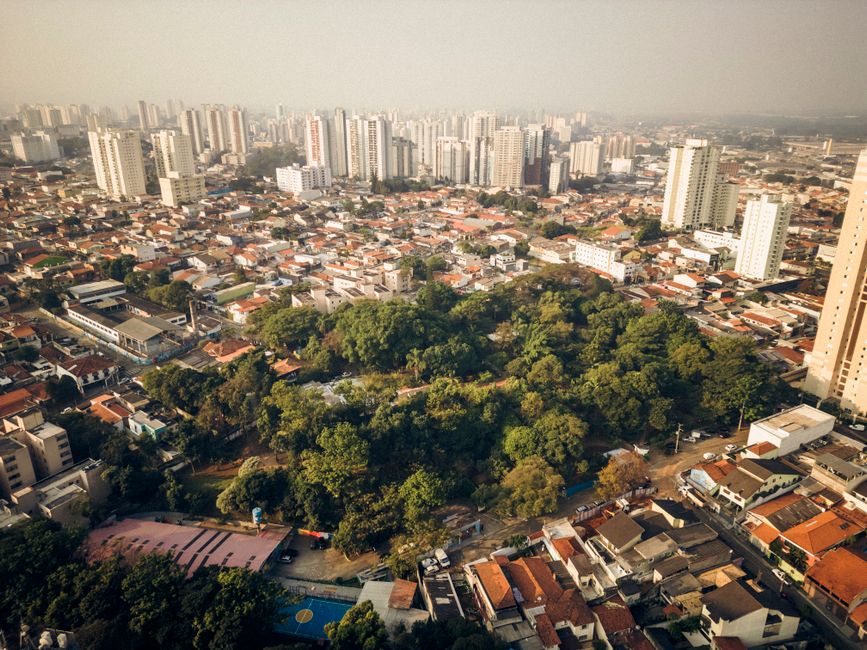
While Jardins remains the city's trophy address and Vila Madalena continues its bohemian reign, a quieter transformation is underway in the transitional zones bordering Pinheiros and Lapa. Investors with longer time horizons are discovering what local real-estate analysts call São Paulo's most undervalued corridor: the tree-lined streets around Rua Bandeira and the emerging micro-district anchoring Avenida Brasil.
The arithmetic is compelling. Properties in central Pinheiros now command BRL 15,000–18,000 per square metre for new residential stock. Yet move two kilometres toward the Vila Leopoldina border or north toward Perdizes intersection, and BRL 9,500–11,500 per square metre becomes the norm. That discount—coupled with announced metro extension feasibility studies and a surge in small-scale commercial activation—has triggered a 12-month rally in transaction volume across these overlooked pockets.
"The fundamentals are shifting," says the São Paulo Real Estate Board's recent neighbourhood sentiment analysis. Population density remains reasonable, street-level commerce is diversifying beyond traditional retail, and institutional investors have begun acquiring development sites along Avenida Pedroso de Morais. Three major office conversions were completed in the past 18 months, signalling confidence in the area's income-generating capacity.
What distinguishes this emerging pocket from speculative fringe neighbourhoods is infrastructure maturity. Existing schools, health facilities, and SPTRANS bus connectivity mean buyers aren't banking solely on future promise. The neighbourhood already functions. What's changing is perception.
Residential unit sizes—typically 85–140 square metres for two- and three-bedroom apartments—appeal to young professionals and investor-owner occupants seeking value outside Itaim Bibi's luxury premium. Off-plan projects launched this year are pricing at 15–22% discounts to equivalent Pinheiros core stock, with pre-sales absorption running 65–70% within four months of launch.
The rental yield picture strengthens the case. Demand from corporate housing seekers and expatriate assignments has lifted average residential rents to BRL 3,500–4,800 monthly for two-bedroom units, translating to gross yields of 4.2–4.8%—materially above trophy-address averages.
Risks remain. Regulatory changes to São Paulo's zoning framework could accelerate or stall development timelines. Traffic congestion during peak hours remains chronic. Yet for investors with 7–10 year horizons, the confluence of supply constraints, improving connectivity perception, and price gaps suggests this annexe of Pinheiros may finally be poised for the repricing cycle others have already experienced.
This article was compiled by AI from the sources linked above and screened before publishing. See our editorial standards.