São Paulo's Duplicate Image Crisis: What Happens Next and the Key Decisions Ahead
City agencies and tech platforms face a pivotal crossroads as repeated use of duplicated visual content undermines public trust in official digital communications.
City agencies and tech platforms face a pivotal crossroads as repeated use of duplicated visual content undermines public trust in official digital communications.
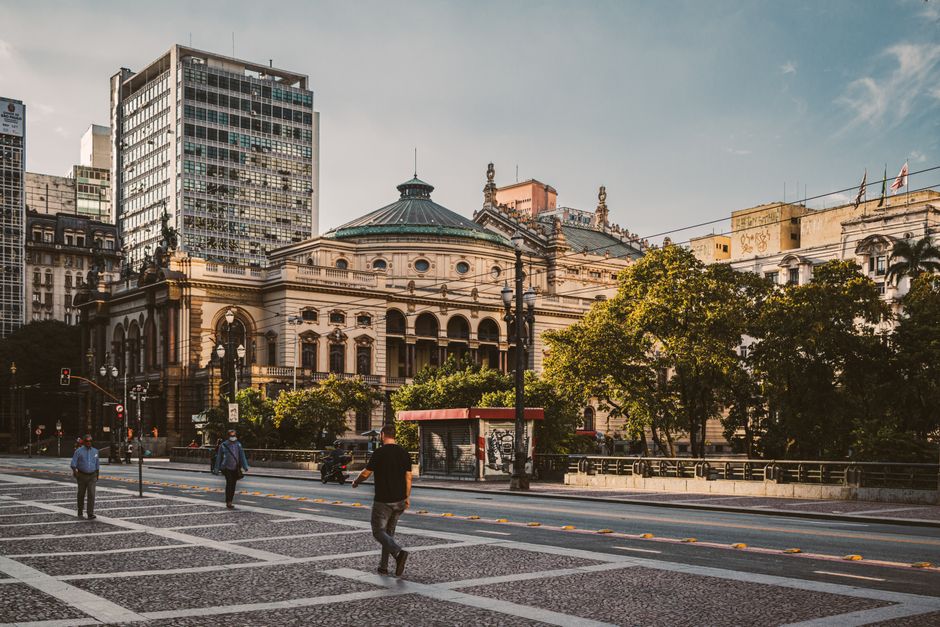
São Paulo's municipal and state agencies are confronting a fast-moving reckoning over the widespread use of duplicate and recycled images in official digital channels — and the decisions made in the next 90 days will determine whether public institutions here can rebuild credibility with a population that is increasingly media-literate and skeptical.
The problem is not new, but it has become impossible to ignore. Across platforms used by city hall at the Viaduto do Chá administrative corridor and agencies linked to the Secretaria Municipal de Comunicação, stock photographs and recycled visuals have appeared repeatedly in public health campaigns, infrastructure announcements, and emergency flood-response briefings — sometimes with the same image reused across multiple contradictory press releases. In a city of 12.3 million people where digital governance is a stated priority under Mayor Ricardo Nunes's administration, the gap between that ambition and the reality of image management has become a liability.
The timing matters. Brazil's national government is finalizing the Lei Geral de Comunicação Pública, a regulatory framework that would set new standards for transparency and accuracy in state-issued media content. Federal agencies in Brasília are expected to publish draft compliance guidelines before September 2026. São Paulo, as the country's largest municipal government by budget, will almost certainly be used as a test case — either as a model or a cautionary example.
There are three pressure points where decisions cannot be deferred much longer. First, the Prefeitura de São Paulo must decide whether to establish a centralized digital asset management system. The Secretaria de Inovação e Tecnologia, headquartered near Avenida Paulista, has had a working group examining this since early 2025, but no formal procurement process has been opened. A centralized image registry — standard practice in cities such as New York and London since the early 2020s — would flag duplicate files before content goes live.
Second, São Paulo's tech ecosystem has a commercial stake in solving this. Companies based in Vila Olímpia and the Faria Lima corridor, including several that have built content verification tools for advertising clients, are watching to see whether city contracts will become available. At least two startups with offices in the Centro de Inovação da USP, located within the Cidade Universitária campus in Butantã, have developed automated reverse-image-search pipelines designed specifically for Portuguese-language institutional content. Neither has a public-sector contract yet.
Third, journalists and civil society organizations — including Agência Pública, which has covered digital transparency issues in Brazilian public administration — will continue to document and publicize instances of duplicate imagery. Each new case increases the reputational cost of inaction.
The duplicate image issue is a symptom of a deeper structural gap. São Paulo's municipal government manages more than 40 active digital communication channels, according to figures published in the Prefeitura's 2025 Relatório de Transparência. Coordination between those channels is fragmented. There is no single editorial authority with the power to pull content across all platforms simultaneously when an error is identified.
That fragmentation has real costs. During the January 2026 flooding crisis in the Zona Leste — which inundated neighborhoods including Itaquera and Guaianases — at least three separate city accounts posted contradictory images of flood barriers, some drawn from previous years' events in different locations entirely. The confusion amplified misinformation at the worst possible moment.
What comes next hinges on whether the Nunes administration treats this as a communications problem or a governance problem. If it is only handled as the former, expect a new visual identity guide and a round of staff training — cosmetic fixes with a short shelf life. If it is treated as the latter, the likely outcome is a formal procurement process for asset management technology, a designated chief digital content officer with cross-agency authority, and a binding internal protocol aligned with the forthcoming federal communication law.
Civil society groups and the city's journalism community will be watching the Câmara Municipal de São Paulo on Viaduto Jacareí for any budget line amendments that signal which direction the administration intends to move. The window to act before the federal framework locks in is narrow. Decisions deferred past October will almost certainly be made for São Paulo rather than by it.
How does this story make you feel?
Spread the word
About this article
Published by The Daily São Paulo
Daily brief
Free, in your inbox before 7am. Weekdays.
More in News