São Paulo Races to Fix Its Duplicate Image Problem — and the Gap With Global Rivals Is Closing
Cities from Mexico City to Nairobi are grappling with redundant visual data clogging public systems, but São Paulo's approach is starting to stand out.
Cities from Mexico City to Nairobi are grappling with redundant visual data clogging public systems, but São Paulo's approach is starting to stand out.
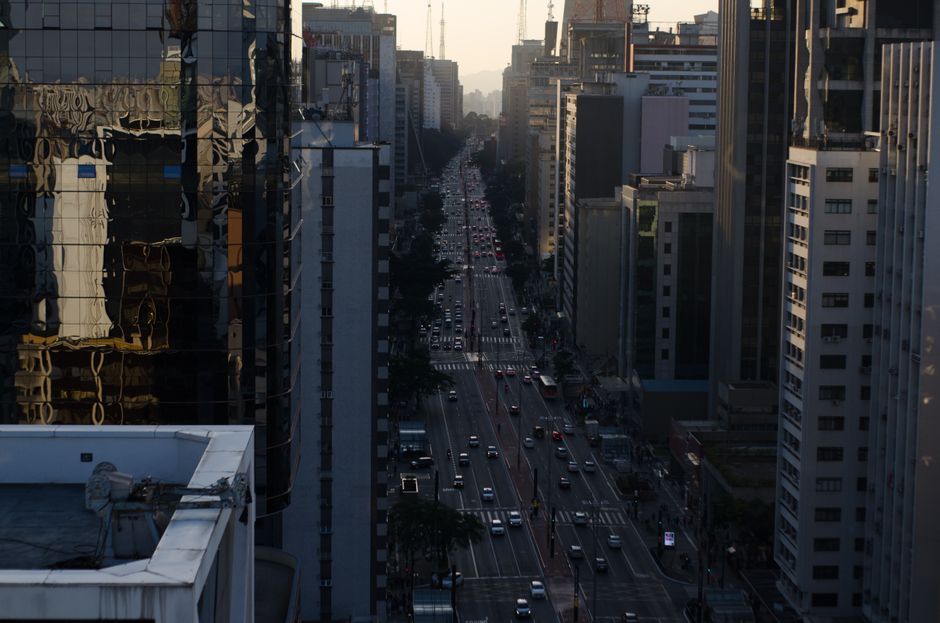
São Paulo's municipal technology infrastructure holds tens of millions of digital images — from CCTV snapshots and urban permit documentation to social-service case files stored across dozens of city secretariats. A significant share of those images are duplicates, consuming server capacity, slowing processing speeds, and quietly inflating the city's data-management costs. The Prefeitura de São Paulo, under Mayor Ricardo Nunes, launched a systematic duplicate-image replacement program in March 2026, targeting the city's Secretaria Municipal de Inovação e Tecnologia (SMIT) as the first agency to run a full audit and purge cycle.
The timing matters. Brazilian cities are under pressure from the federal government's agenda around digital transformation, with Brasília pushing municipal bodies to align their data practices with the Lei Geral de Proteção de Dados, the country's data protection law that came into full enforcement effect in 2021. Bloated image databases create not just inefficiency but compliance risk — storing redundant personal data longer than necessary puts agencies in a legally exposed position. For São Paulo, the largest city in Latin America and the economic engine of a country whose government under President Luiz Inácio Lula da Silva has staked credibility on modernisation, getting this right carries real political weight.
SMIT's audit, begun in the first quarter of 2026, uses perceptual hashing — a technique that generates a compact fingerprint of each image to detect near-identical copies even when file names differ. The agency has contracted SP-Tech, a public-private technology consortium based in the Berrini Avenue corridor in Itaim Bibi, to run the deduplication pipeline across roughly 40 terabytes of imagery held in the city's Parque Tecnológico São Paulo data node in Cidade Universitária. A second phase, expected to begin in September 2026, will extend the audit to the Secretaria Municipal de Habitação, whose permit and inspection files are among the most image-heavy in the system.
City officials have not publicly released final figures, but documents circulated to the Câmara Municipal de São Paulo in May 2026 indicated that early-stage deduplication of SMIT's holdings reduced active image storage by approximately 18 percent in the pilot batch — a meaningful result, though officials cautioned it was preliminary. The annual storage cost for municipal image archives across all secretariats has not been broken down publicly, making independent verification of projected savings difficult at this stage.
Mexico City is the most instructive comparison. The Agencia Digital de Innovación Pública there began a similar deduplication drive in 2023, targeting imagery held by its urban mobility and public-safety departments. By early 2025, Mexico City had publicly reported reducing its redundant image footprint by around 22 percent across priority systems — a benchmark São Paulo's SMIT pilot is approaching but has not yet matched at city-wide scale.
Nairobi's City Hall, working with support from a World Bank digital-governance grant, completed a narrower but faster deduplication exercise in 2024 across its land-registry image database, the source of some of the city's most persistent administrative bottlenecks. The Nairobi exercise was limited in scope but demonstrated that a focused, single-database approach can deliver results faster than a broad cross-secretariat audit — a lesson São Paulo's planners are aware of, according to documents submitted to the Câmara.
Bogotá and Santiago have both invested in cloud-migration projects that implicitly address duplication by forcing data rationalisation before transfer, but neither has published results specific to image-file deduplication as a standalone metric. São Paulo's decision to measure and report the deduplication rate separately puts it ahead of most regional peers in transparency, if not yet in raw outcomes.
For residents and businesses that interact with city systems — whether filing a construction permit in Vila Madalena or registering a social-assistance case in Capão Redondo — the practical benefit will show up as faster processing times and fewer requests to resubmit documentation that the system failed to retrieve. SMIT has indicated it expects to complete the full Secretaria-wide audit by the end of the first quarter of 2027. Whether the September 2026 expansion to housing records stays on schedule will be the clearest near-term signal of whether the program has real institutional momentum or is moving at the slower pace that has historically characterised São Paulo's large-scale IT rollouts.
How does this story make you feel?
Spread the word
About this article
Published by The Daily São Paulo
Daily brief
Free, in your inbox before 7am. Weekdays.
More in News