São Paulo Races to Clean Up Its Visual Pollution Problem — and Other Megacities Are Watching
From Bela Vista to Brás, the city's crackdown on duplicate and illegal signage is drawing comparisons to campaigns in Bogotá, Seoul and beyond.
From Bela Vista to Brás, the city's crackdown on duplicate and illegal signage is drawing comparisons to campaigns in Bogotá, Seoul and beyond.
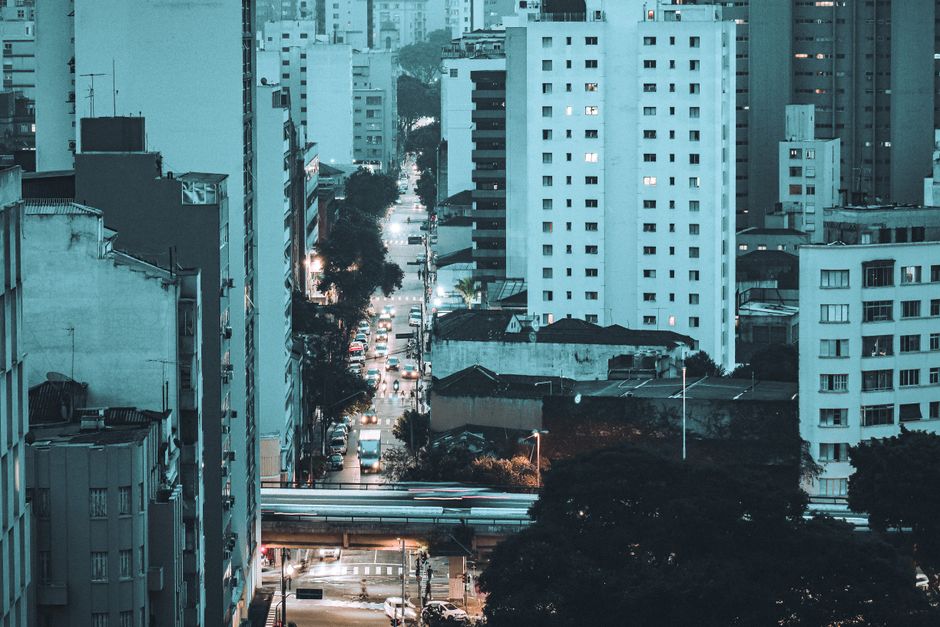
São Paulo's municipal inspectors removed more than 15,000 irregular outdoor panels from the city's central districts between January and June of this year, according to figures released by the Secretaria Municipal de Urbanismo e Licenciamento. The target: the sprawling culture of duplicate image signage — panels, banners and digital screens that reproduce identical or near-identical advertisements across the same block, often without a valid permit. The practice chokes the visual corridor of high-traffic corridors like Avenida Paulista and Rua Augusta, and enforcement has become one of the more contentious planks of Mayor Ricardo Nunes's second-term urban agenda.
The timing matters. São Paulo is deep into revisions of its Plano Diretor, the city's master urban plan, and signage regulation sits within a broader push to reclaim public visual space. The issue has sharpened since the 2007 Lei Cidade Limpa — the pioneering law that banned billboards from building facades — because enforcement gaps allowed a new wave of duplicate digital panels and repetitive storefront imagery to fill the void. Nearly two decades on, the original law's spirit is being tested against a market that has simply adapted its tactics.
The Secretaria launched the Programa de Regularização de Comunicação Visual in March 2026, requiring businesses along designated high-visibility corridors — including stretches of Rua 25 de Março in Brás and the commercial blocks flanking Largo da Batata in Pinheiros — to submit digital inventories of all external signage by August 31. Any panel appearing more than once within a 200-metre radius without distinct informational content is now classified as a duplicate image violation. Fines start at R$5,000 per panel per month under the updated framework.
Instituto Cidade Limpa, the civil-society watchdog that helped draft the original 2007 legislation, has been tracking compliance. The organisation mapped 4,300 active duplicate-image violations in the Sé and República subprefectures alone as of May 2026. That figure, drawn from the group's public monitoring database, underlines how far enforcement still has to travel even after six months of intensified inspection activity.
Bogotá offers the most direct parallel. The Colombian capital's Decreto 959 of 2000 established a similar visual-pollution framework, and the Alcaldía de Bogotá ran a major duplicate-signage removal campaign across the Candelaria and Chapinero districts between 2022 and 2024. City officials there reported reducing illegal panels by roughly 40 percent over that two-year window, according to documents published by Bogotá's Secretaría Distrital de Planeación. São Paulo's programme is more recent, but its ambition — digital inventory mandates, per-panel fines and neighbourhood-by-neighbourhood sweeps — closely mirrors the Bogotá playbook.
Seoul went further, faster. The Seoul Metropolitan Government's 2019 Outdoor Advertisement Reform Act gave district offices authority to remove duplicate panels within 48 hours of a complaint being logged, with no appeals window for unlicensed installations. The result was a measurable drop in illegal signage density in Jongno-gu and Mapo-gu, two districts used as pilot zones. São Paulo's programme allows a 30-day remediation period before fines kick in — a gap that business associations in Brás lobbied for, citing the cost and logistical burden of rapid compliance for small traders.
New York City's approach under its Department of Buildings has been more reactive than proactive: complaints drive inspections rather than systematic block-by-block audits. That model has drawn criticism from urban planning researchers at Columbia University's Graduate School of Architecture, who have documented persistent duplicate signage clusters in commercial corridors in the Bronx and Queens. São Paulo's Secretaria appears to have deliberately chosen the Bogotá-Seoul path of proactive mapping over New York's complaint-led system.
What comes next is a municipal vote, expected in September 2026 in the Câmara Municipal de São Paulo, on whether to extend the duplicate-image rules to interior shopping galleries — a category currently exempt. The vote will test how far the Nunes administration is willing to push the programme into private commercial space. For businesses on Rua 25 de Março, the clock is already running: the August 31 inventory deadline leaves fewer than two months to catalogue every panel, reconcile duplicates and file for regularisation or removal before the fines begin.
How does this story make you feel?
Spread the word
About this article
Published by The Daily São Paulo
Daily brief
Free, in your inbox before 7am. Weekdays.
More in News