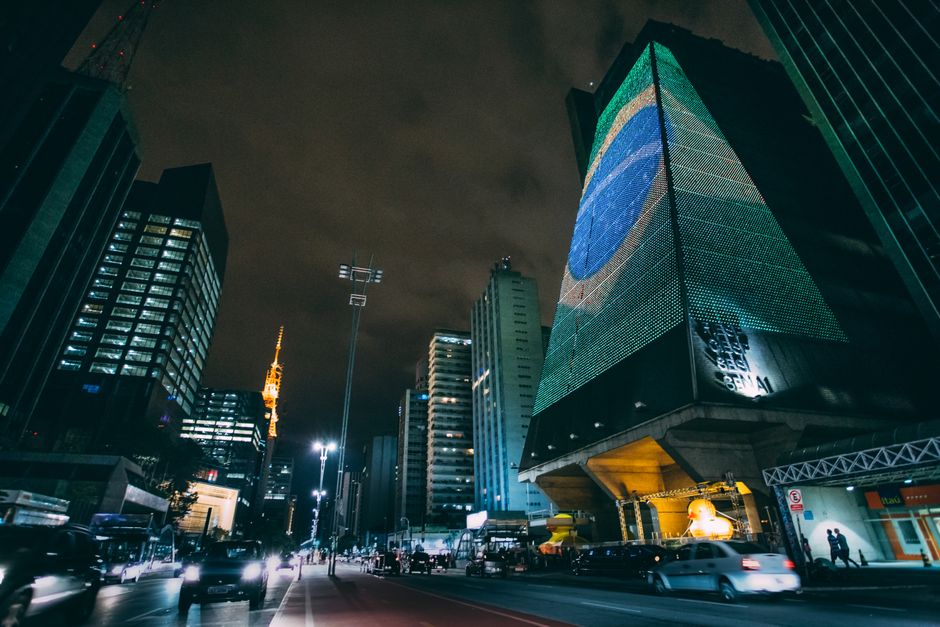
São Paulo has spent decades drowning in its own contradictions. The largest metropolitan economy in Latin America — home to more than 22 million people across its greater urban sprawl — loses an estimated R$2.1 billion annually to flood damage, according to municipal engineering estimates. Now, a convergence of federal money, startup pressure and a genuine political will from the Lula administration is pushing city hall to do something it has historically resisted: commit to a long-term drainage and water reuse architecture rather than patch the same streets after every summer deluge.
The urgency is not manufactured. This past January and February, Marginal Tietê flooded at least four times in six weeks, cutting off freight routes between the eastern industrial corridor and the port at Santos. Residents in Jardim Pantanal, one of the lowest-lying bairros in the Zona Leste, reported standing water inside homes for 11 consecutive days in February. Internationally, France recorded more than 2,000 excess deaths during its recent heatwave peak — a reminder that extreme weather is producing cascading crises in cities that assumed they had time to prepare. São Paulo does not have that luxury.
What's Actually Being Built — and Where
The centrepiece of the current push is the Programa Córrego Limpo 2.0, relaunched in March 2026 with R$480 million in combined federal and municipal funding. The program targets 42 tributary streams across the city, prioritising the Córrego Ipiranga basin in the South Zone and the Córrego Mandaqui network in the North. Sabesp, the state water utility currently mid-privatisation after its partial share sale in 2024, is contracted to handle the treatment infrastructure on eight of those tributaries. The rest falls to the city's own Secretaria Municipal de Infraestrutura Urbana, which has been chronically understaffed.
In Pinheiros, the river revitalisation project — repeatedly announced, repeatedly delayed since 2019 — now has a hard contractual deadline of December 2027 tied to the federal disbursement schedule. Miss it, and R$310 million in federal transfers get suspended. That deadline is the single most consequential piece of leverage the Lula government has over city hall right now.
Meanwhile, a cluster of cleantech startups concentrated around the Cubo Itaú hub on Paulista Avenue and the Distrito Inovação corridor in Sumaré are positioning themselves as implementation partners. Three companies — Acqua Systems Brasil, Hydroverde, and a stealth-mode spinout from USP's Escola Politécnica — are piloting distributed water-reuse modules in commercial buildings in Jardins and in the Vila Madalena neighbourhood. The modules capture greywater for toilet flushing and micro-irrigation, and early data from a six-month pilot on Rua Harmonia showed a 34 percent reduction in municipal water consumption in the 11 buildings enrolled.
The Decisions That Will Define the Next 18 Months
Three choices now sit on Mayor Ricardo Nunes's desk, and political insiders say at least one of them will be resolved before the October municipal budget vote.
First, whether to mandate water-reuse systems in all new commercial construction above 1,500 square metres — a measure that passed first reading in the Câmara Municipal in May but stalled over industry lobbying. Second, whether to greenlight the expansion of the piscinão detention system — giant underground reservoirs that temporarily hold floodwater — into the Zona Norte, where three new sites near Santana have been surveyed but not approved. Each piscinão costs roughly R$90 million to build and takes 28 months to complete. Third, and most politically fraught: whether Sabesp's partial privatisation allows sufficient public-interest obligations to force investment in low-income catchment areas in Parelheiros and Grajaú, where the infrastructure gap is widest and the flood risk highest.
The federal government's position, relayed through the Ministério das Cidades, is that the money is available but the city must show a coherent governance structure before the next tranche releases in November 2026. That means São Paulo has roughly four months to stop announcing innovation and start administering it. The startups, the engineers at Sabesp, and the communities along the Tietê floodplain are all watching the same calendar.