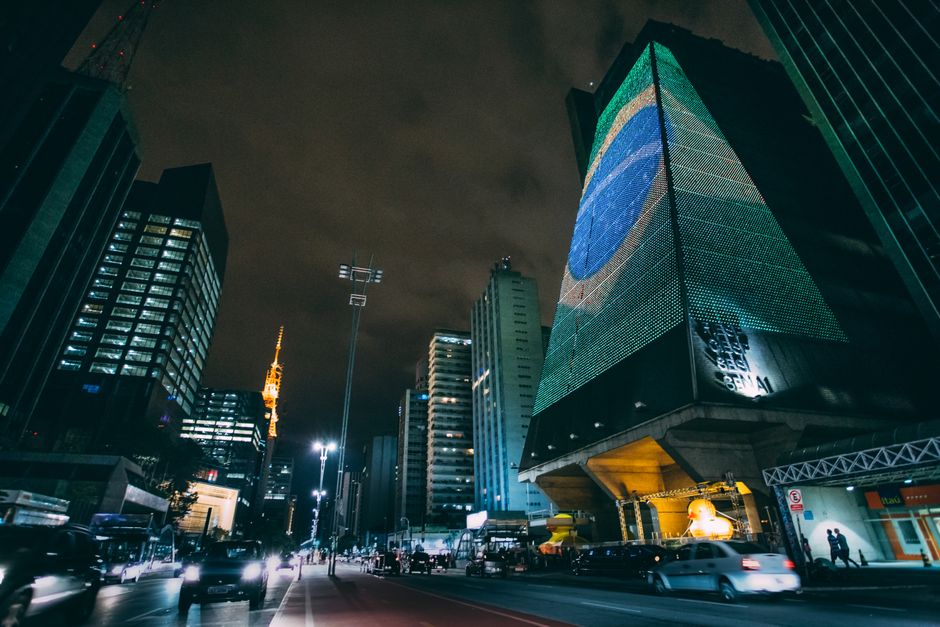
São Paulo's municipal government confirmed this week that the city will begin enforcing mandatory sustainability performance ratings for commercial buildings larger than 2,000 square metres starting January 2027, a policy shift that will touch everything from the electricity bills of small business owners on Rua Augusta to the operating costs of logistics hubs in Brás. The Programa de Certificação Ambiental Paulistana, administered through the Secretaria do Verde e do Meio Ambiente, is the mechanism through which Mayor Ricardo Nunes has chosen to advance the city's stated goal of reducing municipal carbon emissions 35 percent by 2030 relative to 2005 levels.
The timing matters. Europe is burying more than 2,000 people killed by a heatwave this summer. West Africa is counting flood dead from Côte d'Ivoire to Senegal. And São Paulo itself lost entire hillside communities in Perus and Brasilândia to January flooding that overwhelmed a drainage system built for a smaller, cooler city. The climate abstractions that politicians have long relied on are becoming concrete and local, and residents are starting to ask what the city is actually doing about it.
What the Metrics Actually Measure — and Who Pays Attention
The certification framework scores buildings across five categories: energy efficiency, water reuse, green coverage, waste management, and urban heat mitigation. Buildings rated below a C on the new scale face a 15 percent surcharge on their IPTU property tax bill starting in 2028. Those hitting an A rating get a 10 percent discount. For a mid-sized commercial property on Avenida Paulista, where average IPTU bills already run above R$80,000 annually for larger units, the financial stakes are real enough to have pushed building managers into consultation meetings with the city's technical teams since March.
In Pinheiros, the neighbourhood association Movimento Pinheiros Vivo has been one of the more organised civic voices pushing for the program's extension to residential condomínios above a certain unit threshold. The group has spent much of 2026 documenting surface temperatures along Rua dos Pinheiros during the February to April heat peaks, finding readings routinely 6 to 8 degrees Celsius higher on asphalt-heavy blocks than on streets with tree canopy. That data — gathered with handheld thermal sensors — has been submitted to the Câmara Municipal and cited in at least two committee sessions this year.
The Instituto de Energia e Meio Ambiente, a São Paulo-based research body, published figures in May showing the city loses an estimated R$4.3 billion annually in productivity and public health costs attributable to urban heat island effects concentrated in the centro expandido and the far eastern zones around Itaquera and Guaianases. Those aren't abstract figures. They translate into workers arriving at jobs already exhausted from heat stress in homes without air conditioning, into children missing school during heat alerts, into elderly residents in Sapopemba calling SAMU for heat-related emergencies at rates the system isn't staffed to absorb.
What Residents Should Watch For Now
Practically speaking, the policy has a few immediate consequences for ordinary paulistanos. Condominium administrators in buildings over the threshold should expect letters from the Prefeitura before September requesting baseline energy and water consumption data for 2024 and 2025. Failure to respond triggers an inspection process. For renters — who make up roughly 30 percent of the city's housing stock according to IBGE's most recent household survey — the concern is whether landlords pass compliance costs directly through rent adjustments, something the city's tenant advocacy groups at the Associação dos Mutuários de São Paulo say they are already monitoring.
Green advocates point to the Parque Trianon on Avenida Paulista as the kind of micro-infrastructure that demonstrates what canopy and permeable surface investment actually buys a dense urban neighbourhood: measurable cooling, stormwater absorption, and usable public space. The challenge is replicating that logic in Cidade Tiradentes, 40 kilometres east, where tree cover per capita is a fraction of what Jardins enjoys. The sustainability metrics framework, if applied without an equity lens, risks certifying the comfort of the already comfortable. That's the fight the next 18 months will settle.