São Paulo's Fiscal Crisis by the Numbers: What City Hall's Budget Shortfall Actually Means
Municipal data reveals the stark arithmetic behind São Paulo's infrastructure and services challenges—and what residents should expect.
Municipal data reveals the stark arithmetic behind São Paulo's infrastructure and services challenges—and what residents should expect.
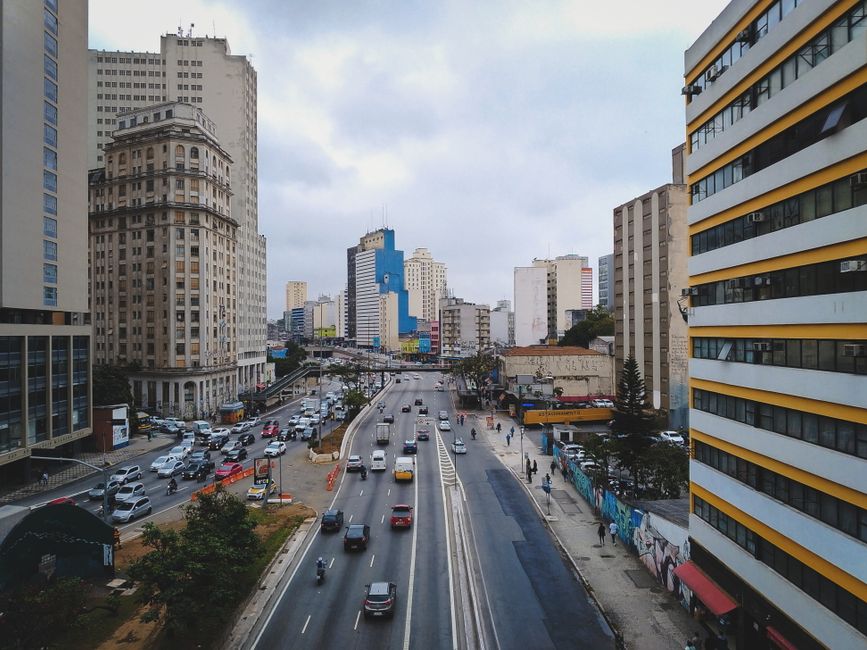
São Paulo's municipal administration is facing a structural budget gap of approximately R$2.8 billion for 2026, according to preliminary reports from the Secretariat of Finance released this month. The figure represents roughly 8.2% of the city's operational budget and signals deepening pressures on services across the metropolitan region's 11.4 million residents.
The shortfall cuts across critical sectors. The transport authority (SPTrans) manages 2,104 buses across 464 lines, but operational costs have risen 34% since 2023 while fare revenues have plateaued at roughly R$1.2 billion annually. The agency's maintenance backlog now stands at 312 vehicles awaiting repairs—a 19% increase from last year—directly affecting service reliability on routes like the historically congested 175-Circular and key arteries through the Zona Leste.
Education presents a parallel crisis. The municipal school network educates 1.09 million students across 3,247 schools, but teacher vacancy rates have climbed to 11.7% this year. The education budget deficit sits at R$847 million, with immediate consequences for classroom infrastructure. A recent facilities audit identified 418 schools requiring urgent structural repairs, with 73 facilities in the Sapopemba and São Mateus neighbourhoods flagged as priority cases.
Healthcare spending tells another story. The Municipal Health Department operates 469 primary care units (UBS) serving approximately 8.2 million patient visits annually—roughly 32% above design capacity. Emergency room wait times in central zones average 4 hours and 22 minutes, according to June data, compared to the municipal target of 2 hours. The mental health crisis response unit budget has contracted 12% year-over-year despite a 41% surge in demand.
Property tax collection offers one bright spot. IPTU revenues increased 7.3% in the first half of 2026, generating R$1.64 billion against projections of R$1.51 billion. However, this windfall remains insufficient to address deferred maintenance across city infrastructure. Road pothole repairs in peripheral neighbourhoods like Parelheiros and Itapecerica da Serra remain underfunded, with the current repair backlog estimated at 8,340 individual street segments.
City Hall has proposed three scenarios: a modest 6.8% increase in municipal service charges; reductions totalling 3,200 contractor positions; or a combination approach involving 2.1% cost adjustments and 1,800 position eliminations. Council debates are scheduled for July, with implementation decisions expected by August.
The numbers underscore São Paulo's persistent balancing act between municipal ambition and fiscal reality.
This article was compiled by AI from the sources linked above and screened before publishing. See our editorial standards.
How does this story make you feel?
Spread the word
About this article
Published by The Daily São Paulo
Daily brief
Free, in your inbox before 7am. Weekdays.
More in News