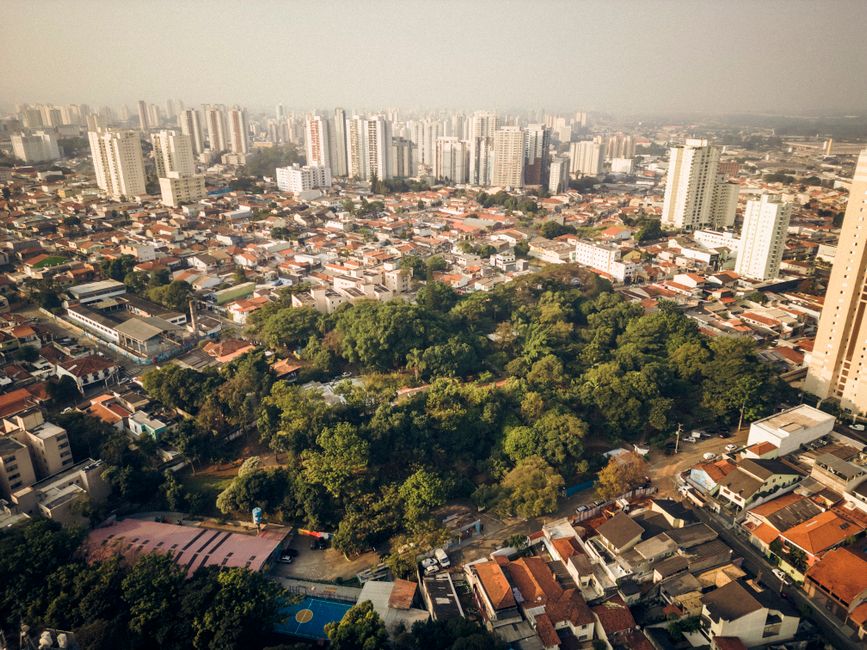
Walk through the Cidade Universitária campus in the Butantã district, and you will see the physical manifestation of a crisis that didn't happen overnight. Cracked facades on buildings constructed in the 1970s, laboratories operating with equipment from the previous decade, and libraries with frozen acquisition budgets tell a story of accumulated negligence that now defines São Paulo's entire education sector.
The deterioration of USP, UNICAMP, and the state university network didn't emerge suddenly. It traces back through three decades of policy whiplash—from the 1990s liberalisation agenda through the commodity boom years when education budgets were paradoxically squeezed despite rising national revenues, to the fiscal austerity measures of the 2010s that systematically starved public institutions.
The numbers are stark. Between 2014 and 2019, the University of São Paulo's purchasing power declined by nearly 40 per cent in real terms. Federal science funding contracts contracted further after 2016. Meanwhile, São Paulo's private education sector—dominated by chains like Anhembi Morumbi and Estácio—expanded aggressively across neighbourhoods from Pinheiros to Tatuapé, capturing middle-class students with flexible payment plans while public universities faced infrastructure crises.
The ideological fractures compounded material decline. Competing visions of what universities should be—research engines versus teaching institutions versus social mobility platforms—created governance deadlocks. Faculty unions, student movements, and administration operated in parallel universes, each claiming crisis while blocking solutions that required sacrifice.
By 2023-2024, the consequences became undeniable. Enrolment at top public universities stagnated. Graduate programs lost international competitiveness. The Av. Paulista, once synonymous with educational prestige, increasingly hosted corporate training centres rather than expanding university facilities. Meanwhile, students in peripheral zones like Zona Leste found places at poorly-resourced satellite campuses or migrated entirely to private institutions.
The structural roots run deeper still. Brazil's constitutional commitment to free public higher education—noble in principle—was never matched with constitutional funding guarantees. Unlike wealthy democracies that ring-fence education spending, Brazil permitted universities to compete annually for resources alongside hospitals, roads, and pensions. In lean years, universities lost.
Today's crisis in São Paulo's schools—overcrowded classrooms, teacher shortages cascading from universities to secondary education, collapsing infrastructure—represents the inevitable endpoint of this trajectory. Understanding how we arrived here requires recognising that what appears as sudden collapse was actually systemic neglect crystallising into institutional failure.
This article was compiled by AI and screened before publishing. See our editorial standards.