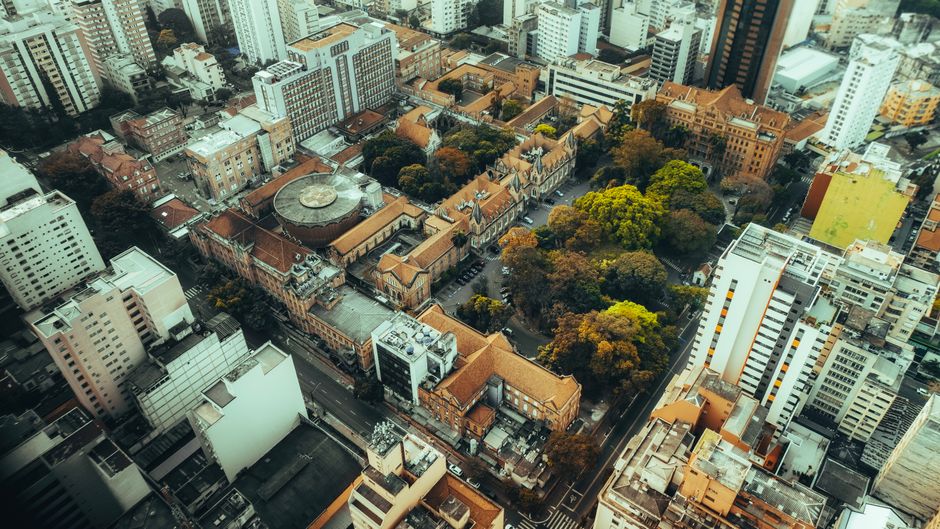
São Paulo's 800 fintechs democratize banking for underbanked Brazilians.
With over 800 active fintech companies now operating in the city, São Paulo's tech entrepreneurs are redefining financial services for millions of underbanked Brazilians.
With over 800 active fintech companies now operating in the city, São Paulo's tech entrepreneurs are redefining financial services for millions of underbanked Brazilians.

Listen to this article · 3:34
The energy in Vila Mariana's co-working spaces tells you everything you need to know about São Paulo's fintech moment. Walk through any of the dense cluster of startup hubs along Avenida Paulista or deeper into the Vila Madalena creative quarter, and you'll find young founders hunched over laptops, racing to solve problems that traditional banks have ignored for decades.
The numbers bear this out. São Paulo now hosts more than 800 fintech companies, a 34% increase over three years, according to recent data from local tech associations. The city accounts for roughly 60% of Brazil's fintech ecosystem—a concentration that reflects both opportunity and competition at levels rarely seen outside of São Paulo's boundaries.
What's driving this acceleration? Partly it's structural. Brazil's banking sector remains dominated by five major institutions, leaving vast populations underserved. Pix, the instant payment system launched nationally in 2020, created a technological backbone that startups have weaponised to build consumer-friendly alternatives. Open banking regulations have forced incumbents to share customer data, lowering barriers to entry for challengers.
The capital allocation is real too. Venture funding into São Paulo fintechs reached approximately R$2.8 billion in 2025, though distributed across an increasingly fragmented landscape. Early-stage founders are bootstrapping or raising modest seed rounds, while Series A rounds have become tougher to secure in an environment where profitability matters more than growth-at-all-costs narratives.
On the ground, the action is visceral. Startups in the Pinheiros and Itaim Bibi neighbourhoods are tackling niche problems: embedded finance for small merchants, credit solutions for gig workers, investment platforms for first-time traders with modest capital. One cluster focuses on cross-border remittances, capitalising on São Paulo's immigrant communities and their need to send money home efficiently.
The regulatory environment remains a wildcard. Brazil's Central Bank has become increasingly proactive in licensing fintechs as banks, but approval timelines can stretch years. Still, entrepreneurs view regulation as a competitive moat rather than pure friction—it keeps the field serious.
What distinguishes São Paulo from other global fintech hubs is pragmatism. Founders here aren't chasing crypto fortunes or venture darlings. They're solving for a real population that earns in Brazilian reais, needs credit, wants better savings rates, and distrusts traditional banks. The next wave of São Paulo fintechs won't be famous internationally. But they'll reshape how 100 million Brazilians manage money.
This article was compiled by AI and screened before publishing. See our editorial standards.
How does this story make you feel?
Spread the word
About this article
Published by The Daily São Paulo
Daily brief
Free, in your inbox before 7am. Weekdays.
More in tech