Paulista Final: Four Elite Teams Battle for July Glory at Morumbi
With the state championship reaching its climax this month, São Paulo's football world braces for a decisive encounter that will determine bragging rights across the metropolis.
With the state championship reaching its climax this month, São Paulo's football world braces for a decisive encounter that will determine bragging rights across the metropolis.
Listen to this article · 3:43
The Campeonato Paulista enters its final phase this July with four powerhouse clubs poised to battle for supremacy in what promises to be one of the most competitive finales in recent memory. The tournament's structure—moving to a knockout format after the group stage—ensures that every match from here carries maximum intensity, and São Paulo's football faithful are preparing for weeks of unbridled passion across the city's iconic stadiums.
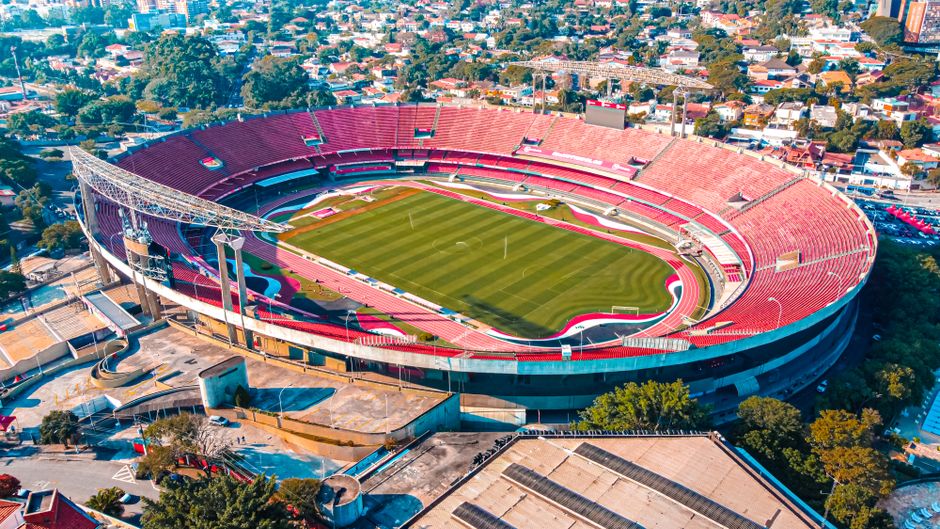
Morumbi, the massive cathedral of Brazilian football nestled in the Zona Oeste, will host crucial encounters. The 72,000-capacity venue has witnessed countless dramatic finals, and this year's convergence of strong squads suggests the atmosphere will be equally electric. Tickets across the city's retail points and official channels are moving rapidly, with standard seats ranging from 80 to 320 reais depending on proximity to midfield action.
The final phase represents a seismic shift from the traditional group stage that consumed May and June. Teams that navigated through the round-robin competitions now face sudden-death scenarios where a single lapse in concentration can end a season's ambitions. This compressed format, adopted to streamline the calendar, demands peak physical conditioning and psychological resilience—precisely the qualities that separate elite operators from pretenders.
São Paulo's football infrastructure has matured considerably. Beyond Morumbi, the Estádio do Pacaembu in Centro and smaller venues across neighborhoods like Tatuapé and Itaquera provide backdrops for this drama. The accessibility via Metro stations near these grounds means supporters from across the metropolitan area—from the suburbs of Osasco to the corridors of Zona Leste—can converge with relative ease.
Analysts point to the elevated standard of play this campaign. The Paulista has traditionally served as a proving ground for young talent and a testing laboratory for tactical innovations before clubs pivot toward the more lucrative Copa do Brasil and national championship. This edition, however, showcases several squads operating at near-maximum efficiency, suggesting that the finalist crowned in July will carry genuine momentum into the competitions that follow.
The financial stakes matter too. Prize money distributions, though modest compared to continental tournaments, provide crucial revenue for clubs' operational budgets. More significantly, the prestige of claiming the state crown—a title with nearly a century of tradition—remains immeasurable in São Paulo's football culture.
As kickoff approaches, the city's football consciousness has shifted entirely toward these final confrontations. Whether matches occur under the floodlights at Morumbi or in the intimate confines of smaller grounds, every ninety minutes will determine which club hoists the trophy that represents São Paulo's football supremacy.
This article was compiled by AI and screened before publishing. See our editorial standards.
How does this story make you feel?
Spread the word
About this article
Published by The Daily São Paulo
Daily brief
Free, in your inbox before 7am. Weekdays.
More in Sport