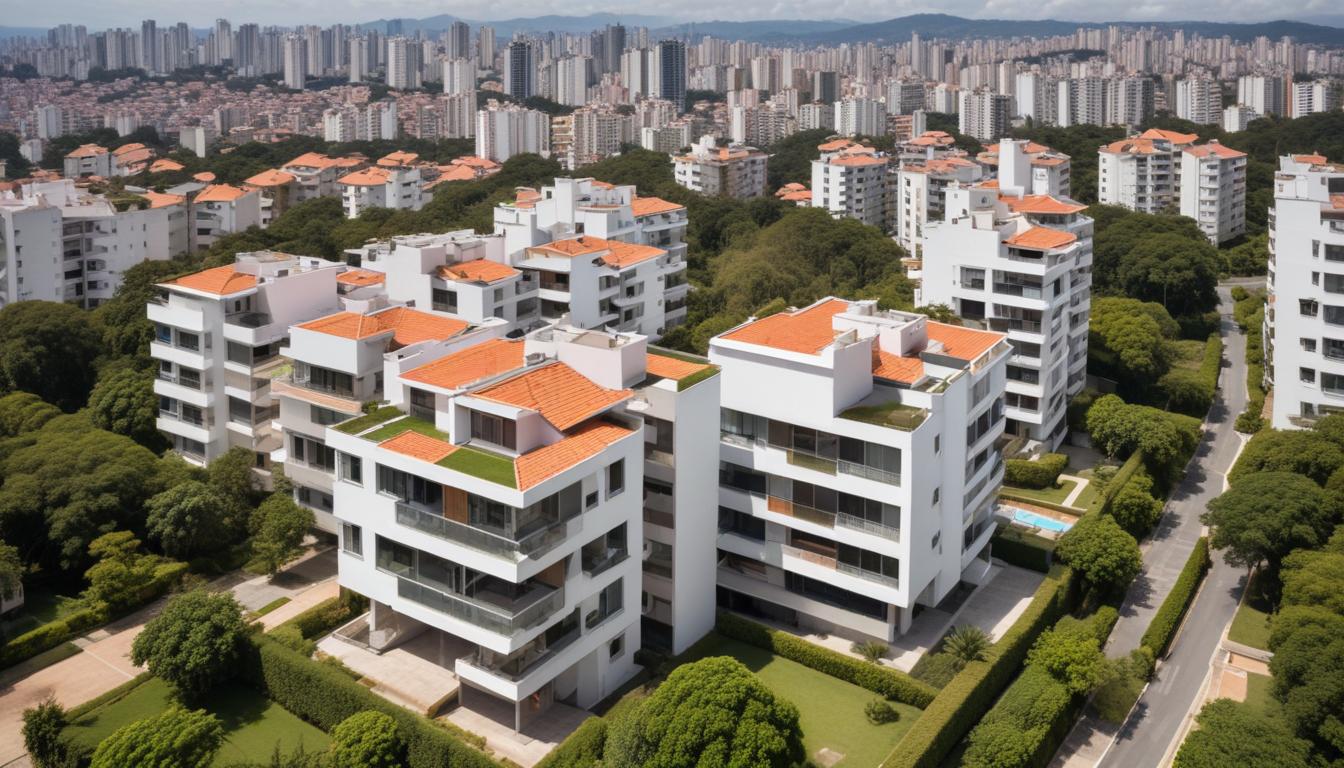
São Paulo's property market remains competitive for first-time buyers, with median prices sitting around BRL 10,000 per square metre across the city. Yet for those willing to explore less saturated neighbourhoods and leverage available government support, realistic entry points exist—particularly in emerging zones like Tatuapé and Mooca, where growth potential offsets proximity trade-offs.
The federal government's Sistema Financeiro da Habitação (SFH) remains the cornerstone financing tool. First-time buyers can access mortgages with interest rates pegged to the Índice de Preços ao Consumidor Amplo (IPCA) plus negotiated spreads, typically lower than market alternatives. Banks including Caixa Econômica Federal, Bradesco, and Santander actively compete for this segment. The key requirement: proof that you've never owned residential property in Brazil. Combined with the Fundo de Garantia do Tempo de Serviço (FGTS), eligible workers can withdraw accumulated balances—often BRL 20,000 to BRL 80,000—as a down payment boost, reducing reliance on personal savings.
Location strategy matters enormously. In established premium zones like Jardins or Itaim Bibi, expect BRL 15,000–20,000 per square metre. Pinheiros and Vila Madalena command BRL 12,000–14,000, making them accessible only with substantial financing. Conversely, Tatuapé and Mooca hover closer to BRL 8,000–9,500 per square metre, with improving metro connectivity and retail development driving long-term appreciation. A modest two-bedroom apartment in Tatuapé might cost BRL 450,000–550,000, financed over 25–30 years at current SFH rates, translating to manageable monthly payments for dual-income households.
Beyond traditional mortgages, some developers offer direct financing schemes with promotional rates during pre-launch phases. The Caixa program targeting properties up to BRL 500,000 also features reduced interest rates for first-time buyers, though competition for these quotas remains fierce.
Professional guidance is essential. Real estate agents operating around Avenida Paulista, Rua Oscar Freire, and emerging neighbourhoods along the Metrô line expansions understand micro-market dynamics. Property lawyers in the Consolação district and surrounding areas—familiar with cartório processes and title verification—should be engaged early to avoid costly delays.
The market cycle suggests consolidation ahead. Historic clearance rates have softened, meaning vendors are more negotiable than eighteen months ago. First-time buyers entering now benefit from reduced competition and potential price corrections in secondary neighbourhoods, while maintaining exposure to São Paulo's long-term urban growth narrative.
This article was compiled by AI from the sources linked above and screened before publishing. See our editorial standards.