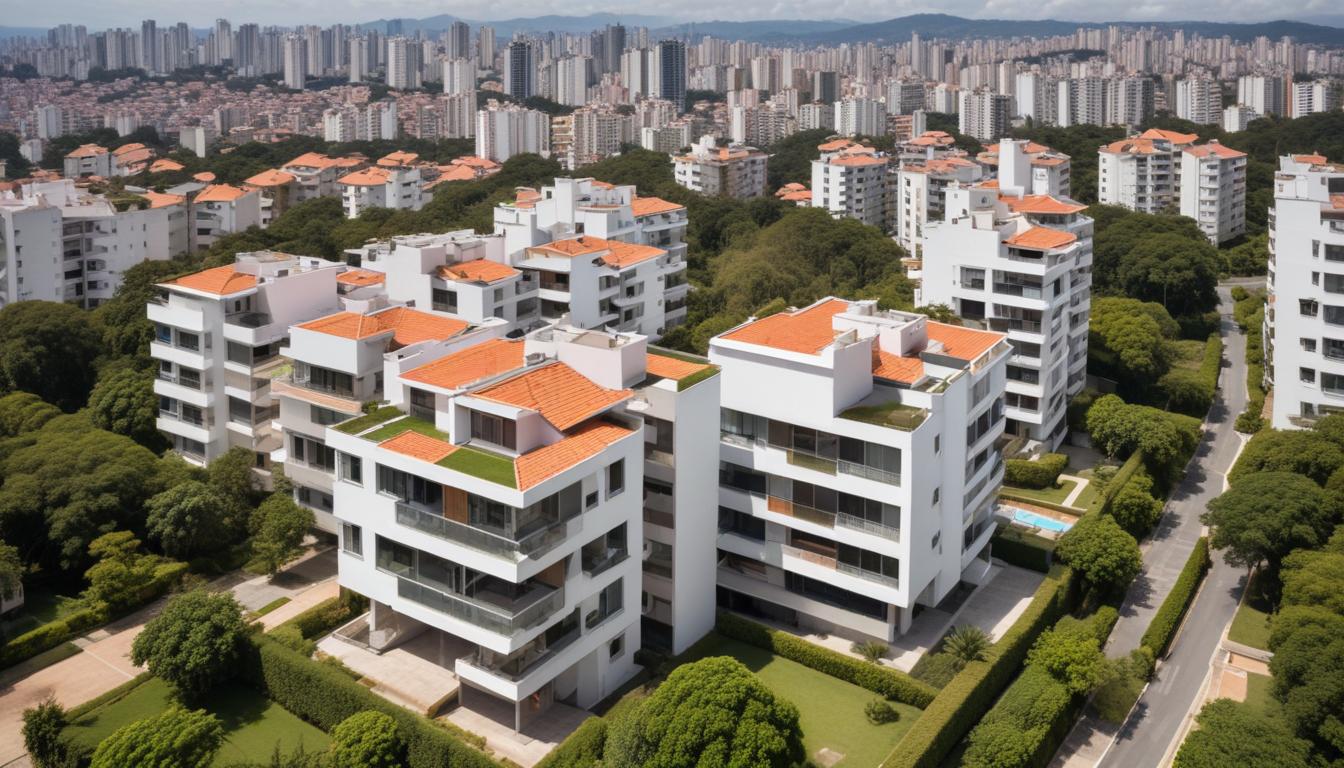
São Paulo's housing market is undergoing a subtle but significant recalibration as new municipal planning decisions begin to reshape neighborhood trajectories. After months of deliberation, the prefeitura's revised zoning regulations—which came into force this quarter—are already influencing buyer behavior and developer strategies across the city's most contested districts.
The most dramatic impact is unfolding in Vila Madalena, where new height restrictions on commercial-residential mixed-use buildings have prompted developers to reconsider project timelines. Properties along Rua Fradique Coutinho, traditionally valued around BRL 12,500–14,000 per square meter, have seen modest softening as investors reassess density potential. Conversely, Tatuapé—designated under the city's new 'mixed-income development corridor'—has attracted renewed attention from mid-market builders, with land parcels near the Metro Tatuapé station trading hands at higher valuations than six months prior.
The policy shift reflects municipal attempts to decouple premium neighborhoods from speculative spiraling while channeling growth toward underutilized zones. By restricting floor-area ratios in established affluent areas like Jardins and Pinheiros, planners hope to stabilize prices and redirect investment capital toward areas like Mooca and the eastern zone, where affordable units remain theoretically viable.
Yet early data reveals a more complicated picture. While average prices across São Paulo remain anchored near BRL 10,000 per square meter citywide, the reallocation hasn't meaningfully expanded affordability. Instead, developers are responding to constrained Pinheiros capacity by targeting Itaim Bibi's remaining pockets, where luxury developments continue commanding BRL 18,000–22,000 per square meter—well beyond typical household reach.
The prefeitura's transport-oriented development framework—linking zoning density bonuses to proximity to CPTM and Metro stations—showed early promise. However, recent analysis suggests unintended consequences: as developers cluster projects near Estação da Luz and Estação São Bento corridors, land speculation in surrounding blocks has accelerated, offsetting affordability gains.
Industry observers and housing advocates remain cautiously watching how enforcement unfolds. The municipal housing secretariat has signaled that stricter social-housing quotas for new projects above 20,000 square meters will accompany zoning changes, though implementation details remain opaque.
As São Paulo confronts mounting demand against finite developable land, these planning interventions represent the city's most comprehensive attempt to reconcile growth with equity. Whether policy can genuinely unlock affordability, rather than simply redistribute scarcity, will define the market's next chapter.
This article was compiled by AI from the sources linked above and screened before publishing. See our editorial standards.