São Paulo's Green Spaces Reveal Five Neighborhoods' True Character
From Vila Madalena's bohemian parks to Pinheiros' waterfront revival, green spaces reveal the true character of São Paulo's most dynamic communities.
From Vila Madalena's bohemian parks to Pinheiros' waterfront revival, green spaces reveal the true character of São Paulo's most dynamic communities.
Listen to this article · 3:31
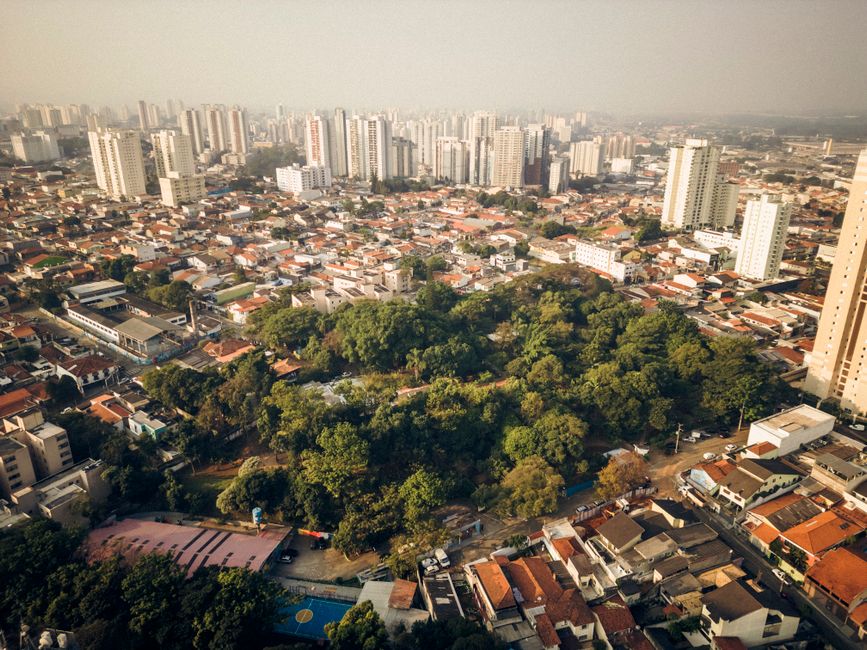
São Paulo's relationship with nature has always been complicated. A sprawling metropolis of 12 million people, it's easy to assume the city is all concrete and commerce. But venture into its neighbourhoods, and you'll discover that green spaces aren't merely recreational amenities—they're cultural barometers, revealing who lives where and how communities define themselves.
Take Parque da Aclimação in the Aclimação neighbourhood. On any weekend morning, you'll witness the demographic and social strata of the area: young families from the middle-class residential towers, elderly couples who've lived here for decades, fitness enthusiasts circling the 1.2-kilometre track. The park's 126 hectares function as a living room for a neighbourhood that's gradually gentrifying but hasn't yet lost its working-class backbone. Entry is free, and that accessibility matters—it's where São Paulo's middle becomes visible.
Contrast this with the Pinheiros waterfront transformation along Avenida Rio de Janeiro. What was once industrial wasteland has become a hotspot for Vila Madalena's creative class. The new cycling paths and garden installations attract a decidedly different crowd: designers, artists, and professionals in their twenties and thirties. The Parque Linear do Pinheiros project, still expanding, signals neighbourhood aspirations—a shift from bohemian grit to aspirational lifestyle destination.
Then there's Ibirapuera, São Paulo's most prestigious green space, which functions almost as an open-air museum of the city's identity. The 158-hectare park draws an estimated 2 million annual visitors across all economic backgrounds. But spend an afternoon observing the concrete pathways and manicured gardens, and you'll notice subtle patterns: which neighbourhoods' residents favour which sections, how the park's cultural institutions (the Museu de Arte de São Paulo nearby) create invisible zoning by class and cultural capital.
What makes these spaces fascinating isn't just their botanical qualities but what they reveal about neighbourhood character. Parks become mirrors. The investment in green infrastructure directly correlates with property values, demographic shifts, and community investment levels. A neighbourhood's parks tell you about its past, its present aspirations, and who gets to decide its future.
As São Paulo continues its rapid transformation—with real estate prices in certain areas climbing 15-20% annually—these green spaces function as anchors of identity. They're where communities gather before they scatter into digital existence. They're where neighbourhood soul still exists, unmediated and unpackaged, among the trees and pathways that connect us all.
This article was compiled by AI and screened before publishing. See our editorial standards.
How does this story make you feel?
Spread the word
About this article
Published by The Daily São Paulo
Daily brief
Free, in your inbox before 7am. Weekdays.
More in lifestyle