São Paulo Commute Stories: Lives on Line 4 Yellow Metro
Meet the 7 million daily São Paulo metro commuters. From nurses to students, discover how people navigate the city's transport system and shape urban life.
Meet the 7 million daily São Paulo metro commuters. From nurses to students, discover how people navigate the city's transport system and shape urban life.
Listen to this article · 3:34
At 7:15 a.m. on the Line 4 Yellow Metro between Butantã and Luz, the carriage fills with the invisible architects of São Paulo's daily functioning. A nurse in blue scrubs scrolls through messages bound for Hospital das Clínicas in Pinheiros. Beside her, a logistics coordinator checks spreadsheets for a warehousing company in the industrial belt of Taboão da Serra. Near the doors, a university student from Itaquaquecetuba clutches textbooks, making the 90-minute commute three times weekly.
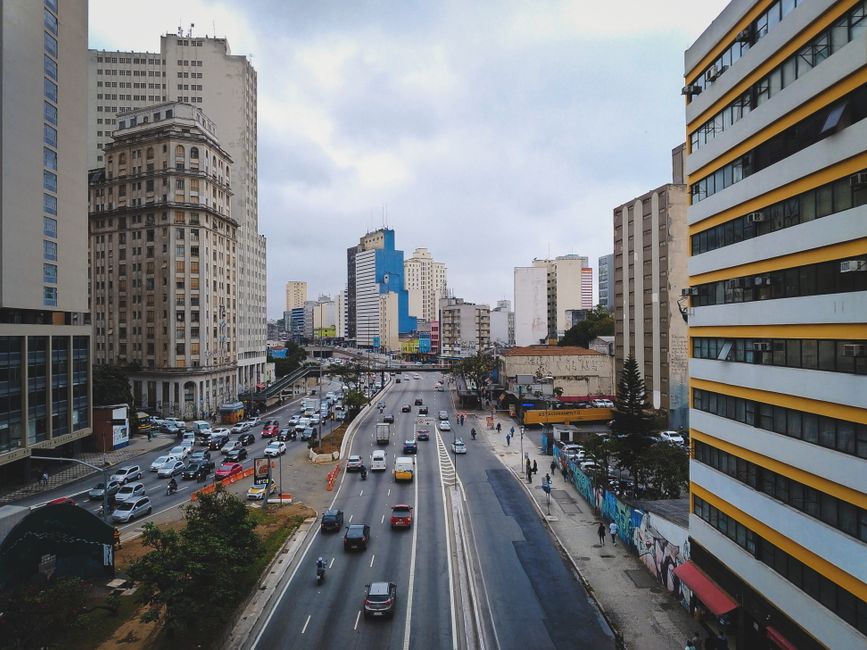
São Paulo's transport system moves approximately 7 million people daily across its sprawling 1,500-square-kilometre territory—a figure that speaks less to infrastructure than to human resilience. The Metro, buses, and increasingly the bike lanes carved through Avenida Paulista and Vila Madalena carry stories of economic mobility, sacrifice, and adaptation that define contemporary Brazil far more honestly than any statistics bulletin.
The transformation is visible if you look closely. Ten years ago, the commute was a trial endured in isolation. Now, informal networks have emerged. Community WhatsApp groups organise shared van routes from distant suburbs like Guarulhos and Franco da Rocha. Social enterprises like Bike Sampa have created part-time work for hundreds of young people as couriers, offering an alternative to the two-hour bus journeys that once dominated their mornings. The cost of a monthly Metro pass—R$150—remains prohibitive for many, yet ridership across all transport modes continues climbing.
The stories accumulate in small moments. A street vendor who wakes at 4 a.m. in São Mateus to reach Ibirapuera Park by sunrise. The elderly couple who have taken the same 702 bus route for thirty years, watching neighbourhoods transform from their preferred seat near the window. The teenage musicians who practise in the tunnels of Brás station, their music echoing against tiled walls where thousands pass unseeing each hour.
What strikes any observer is the dignity maintained within chaos. São Paulo's transport infrastructure creaks under pressure—delays are routine, overcrowding a daily fact—yet the city's commuters move with purpose. They are teachers, cleaners, engineers, street cooks, and accountants. They are the economic engine and the social fabric simultaneously.
As the city confronts congestion and the slow expansion of cycling infrastructure, the real challenge isn't technological. It's remembering that every delay, every crowded platform, every missed connection represents not just a logistical failure but a friction point in millions of individual lives. São Paulo moves because its people move. Their faces, their routines, their quiet persistence—these are the true measures of how a megacity functions.
This article was compiled by AI and screened before publishing. See our editorial standards.
How does this story make you feel?
Spread the word
About this article
Published by The Daily São Paulo
Daily brief
Free, in your inbox before 7am. Weekdays.
More in lifestyle