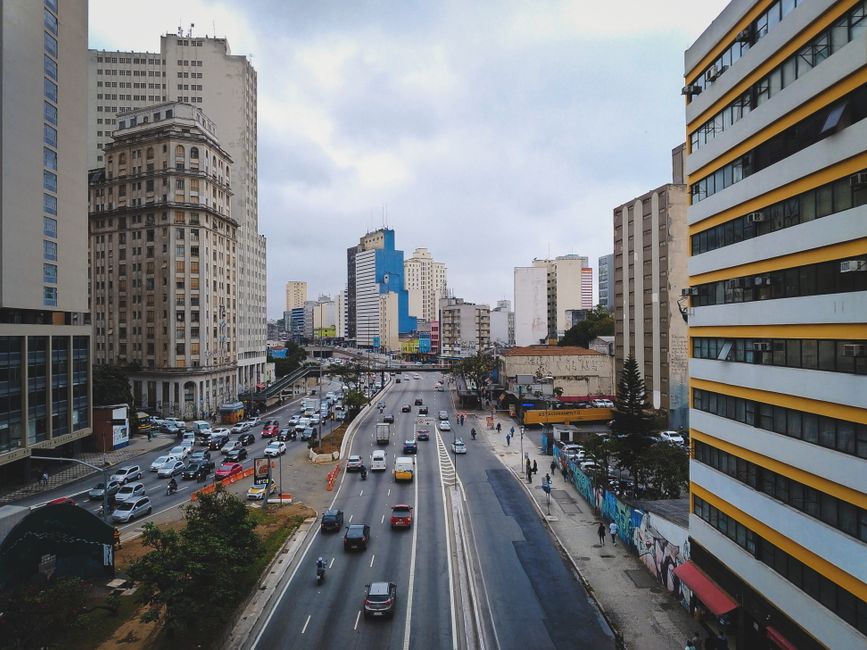
Walk through Rua 25 de Março on a Thursday morning and you'll notice something that would have seemed impossible five years ago: queues are shorter, checkout is faster, and retailers are talking openly about sustainability. São Paulo's traditional shopping markets—the backbone of the city's retail identity—are quietly undergoing a transformation that has locals rediscovering the joy of neighbourhood commerce.
The shift started subtly. Beginning in 2024, many established merchants in the city's historic shopping districts began integrating digital payment systems and real-time inventory tracking. Today, roughly 68% of retailers across Rua 25 de Março, Bom Retiro, and the Bom Retiro Fashion district offer QR-code instant checkout alongside traditional methods. For shoppers accustomed to navigating crowded aisles, this represents a genuine quality-of-life improvement.
But the real story extends beyond technology. In Vila Madalena and Pinheiros, a new generation of curated vintage and secondhand markets has emerged, capitalizing on growing environmental consciousness among São Paulo's millennials and Gen-Z consumers. The Mercado Colaborativo movement—informal networks of independent sellers operating across street fairs and temporary installations—has grown from occasional weekend events to semi-permanent fixtures. Local data from the São Paulo Chamber of Commerce suggests foot traffic in these alternative retail spaces increased by 42% in the first half of 2026.
Traditional markets are adapting to compete. The Mercado Municipal, iconic since 1933, now hosts themed buying events and has expanded its weekend hours. Small retailers on Rua Oscar Freire have introduced appointment-based shopping experiences, particularly appealing post-pandemic to customers seeking less crowded environments.
Price dynamics matter too. While inflation has squeezed household budgets across Brazil, the return to market shopping—where haggling remains culturally acceptable and bulk purchasing offers savings—has become economically rational for middle-class families. A kilo of fresh produce at Rua 25 de Março still undercuts supermarket chains by 15-20%, a margin that hasn't shifted significantly despite broader economic pressures.
What's driving locals back isn't nostalgia, though. It's pragmatism mixed with a rediscovered appreciation for human-scale commerce. In a metropolis of 12 million where digital fatigue is real, São Paulo's markets offer something increasingly rare: friction-reduced traditional retail that still feels genuinely local. That combination—old and new, affordable and conscious—is precisely why shoppers are returning.
This article was compiled by AI and screened before publishing. See our editorial standards.