São Paulo's Secret: Why This City Rewrites the Rules for Global Relocators
From its unmatched cultural layering to a cost of living that defies expectations, São Paulo offers expats something few megacities can match.
From its unmatched cultural layering to a cost of living that defies expectations, São Paulo offers expats something few megacities can match.
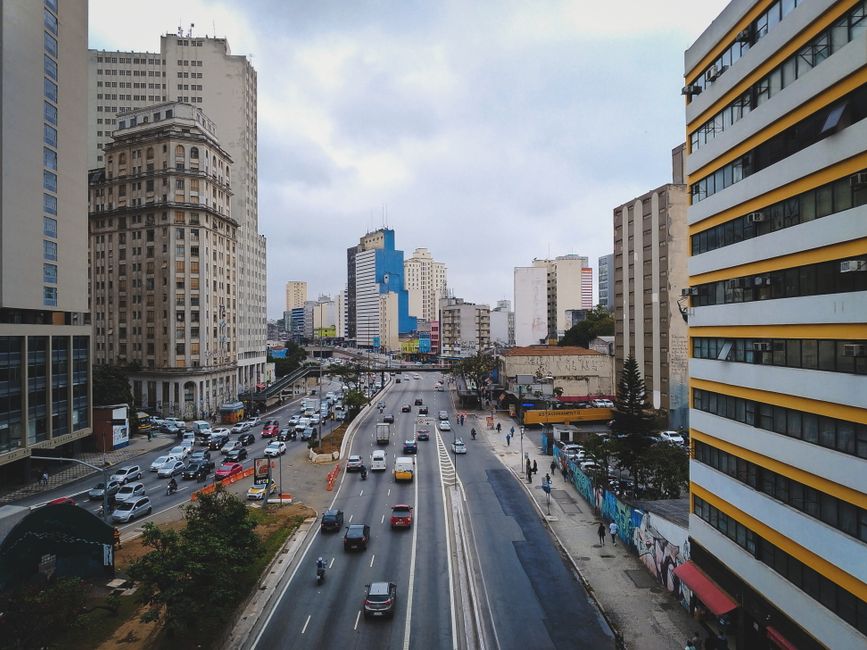
When relocating professionals compare São Paulo to London, Singapore, or New York, they're often surprised by what sets the Brazilian metropolis apart. With 12 million residents across the greater metropolitan area, this isn't a city trying to attract expats through tax incentives or innovation hubs alone. Instead, São Paulo wins through an unusual alchemy: affordability meets world-class culture, and genuine neighbourhood character survives alongside corporate infrastructure.
Consider the fundamentals. A comfortable one-bedroom apartment in Vila Madalena or Pinheiros—neighbourhoods favoured by professionals relocating from abroad—runs roughly R$3,500 to R$5,500 monthly (approximately USD $700–$1,100). Compare that to central London or Sydney, where the same space easily exceeds $2,000. This isn't accidental: São Paulo's vastness means neighbourhoods proliferate, each with distinct personality. Higienópolis delivers belle-époque grandeur; Consolação pulses with street art and bohemian energy; Mooca offers industrial-chic conversions and younger demographics.
The cultural density is genuinely disorienting to newcomers accustomed to more stratified cities. The Museu de Arte de São Paulo (MASP) on Avenida Paulista represents Latin American modernism without apology. The Instituto Tomie Ohtake showcases contemporary work that rarely reaches international circuits. Yet on the same evening, you'll find world-class live music in Vila Mariana clubs, Michelin-starred dining in Jardins, and hole-in-the-wall botecas serving caipirinhas that cost less than a coffee elsewhere.
Food culture here defies easy categorisation. São Paulo isn't pretending to be a culinary capital—it *is* one, shaped by Japanese, Italian, Lebanese, and African immigrant communities whose influence runs through everyday dining, not just special-occasion restaurants. The Liberdade neighbourhood remains the largest Japanese settlement outside Japan; Rua 25 de Março concentrates immigrant wholesale trade across entire city blocks.
For expats accustomed to hermetic corporate expat bubbles, São Paulo demands engagement with Portuguese language and genuine neighbourhood life. The city doesn't coddle—there's no established English-speaking infrastructure like Dubai or Hong Kong. This friction, counterintuitively, creates deeper integration and faster cultural fluency.
Relocation logistics remain challenging: bureaucratic processes move slowly, traffic can consume hours daily, and São Paulo's economic volatility occasionally destabilises rental markets. Yet these obstacles pale against the city's fundamental offer: live at world standard while participating in a genuinely cosmopolitan, unscripted urban ecosystem. Few global cities still permit that combination.
This article was compiled by AI from the sources linked above and screened before publishing. See our editorial standards.
How does this story make you feel?
Spread the word
About this article
Published by The Daily São Paulo
Daily brief
Free, in your inbox before 7am. Weekdays.
More in lifestyle