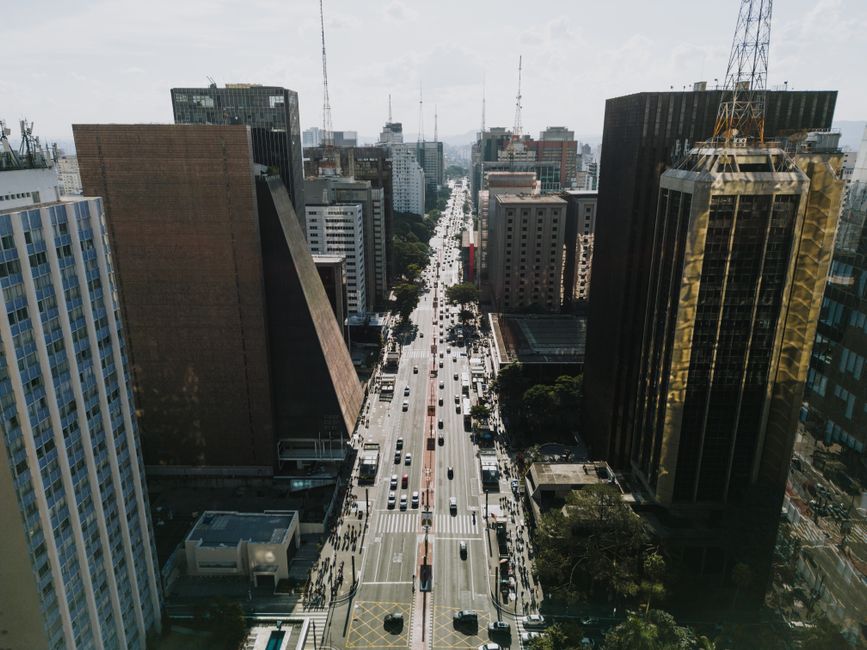
São Paulo's commercial property market is sending mixed signals as mid-2026 unfolds, with economic indicators painting a complex picture of investor behaviour and capital allocation across the city's prime office corridors.
The Avenida Paulista corridor—traditionally São Paulo's most coveted address—has experienced a notable slowdown in new leasing activity. Vacancy rates in Class A office space along the avenue have climbed to approximately 18%, up from 14% a year earlier, according to local commercial real estate data. This shift reflects a broader pattern: multinational companies are consolidating operations or relocating support functions to lower-cost secondary markets, driven partly by persistent inflation concerns and currency pressures on the Brazilian real.
Investment flows tell a revealing story. Institutional investors—pension funds, sovereign wealth players, and international REITs—have recalibrated their São Paulo exposure. Capital inflows into commercial real estate fell by roughly 23% in the first quarter of 2026 compared to the same period last year, with nervous money gravitating toward logistics and industrial assets rather than downtown office towers.
Yet not all zones face headwinds equally. The Vila Mariana and Itaim Bibi neighbourhoods, increasingly attractive as mixed-use hubs, have seen stronger retention of tenants and more stable rental values. Serviced office providers and flexible workspace operators continue expanding here, responding to post-pandemic work arrangements that favour distributed layouts over traditional single-tenant occupation.
The Brazilian Central Bank's interest rate trajectory—currently hovering near 11%—remains a crucial indicator shaping investor calculations. Higher real rates increase the cost of leveraged acquisitions, prompting cash-heavy players to slow their purchases and existing owners to reassess hold-and-develop strategies. This environment has compressed cap rates to levels many international investors find unattractive, particularly when comparing risk-adjusted returns to opportunities in neighbouring markets.
Currency volatility compounds these dynamics. Dollar strength relative to the real has made Brazilian assets cheaper for foreign capital but simultaneously raised refinancing costs for locally-financed projects. Some developers have paused construction starts along Rua Augusta and surrounding precincts, waiting for clearer macroeconomic signals.
Looking ahead, São Paulo's commercial property fundamentals will likely track three economic indicators closely: inflation persistence, corporate earnings health, and foreign direct investment appetite. Market observers note that stabilisation in any one of these metrics could rapidly reverse current caution. For now, investors remain in a show-me posture, watching quarterly economic data with unusual intensity.
This article was compiled by AI from the sources linked above and screened before publishing. See our editorial standards.