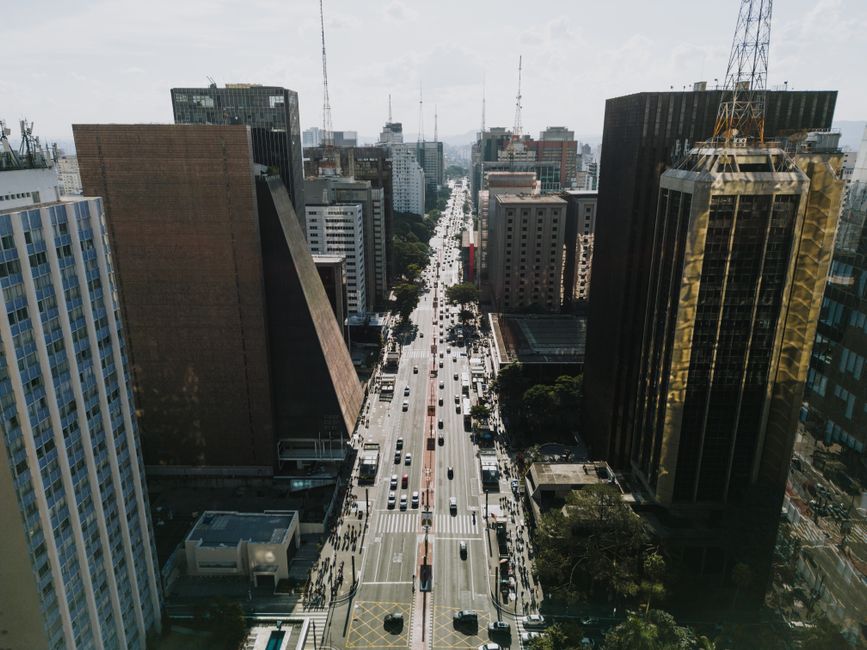
The gleaming office towers that line Avenida Paulista tell a familiar story these days: international corporations are recalibrating their global footprints, and São Paulo is becoming the unexpected beneficiary. But beneath the headline announcements about new regional headquarters lies a more complex reality rippling through the city's labour market—one that's creating both extraordinary opportunities and acute talent shortages.
Over the past eighteen months, multinationals relocating supply chain operations from geopolitically unstable regions have injected fresh demand into São Paulo's professional services sector. Import-export specialists, logistics coordinators, and compliance officers with experience navigating tariff regimes are commanding premium salaries. Recruitment agencies operating from the Jardins district report that candidates with expertise in trade policy now earn 25-35% above market rates for equivalent roles just two years ago. A senior international trade compliance officer can expect to negotiate packages exceeding R$250,000 annually, a significant premium in a market where mid-level corporate salaries typically hover around R$120,000.
The Pinheiros neighbourhood, long São Paulo's tech and creative hub, is now seeing an influx of specialized consultancies focused on supply chain restructuring and tariff optimization. Between 2024 and mid-2026, at least seven international trade advisory firms established São Paulo offices, drawn by the concentration of multinational talent and proximity to port operations in Santos.
Yet this reshuffling is creating visible friction. Companies complain of a shallow talent pipeline. Universities in São Paulo, including FGV and USP, have expanded trade and international business programmes, but degree holders won't saturate the market until 2027 at earliest. In the interim, corporations are aggressively poaching experienced professionals from competitors—and increasingly, they're recruiting bilingual Brazilian professionals from São Paulo's diaspora community abroad, offering relocation packages that rival those in New York or London.
The trend extends beyond corporate roles. Coworking spaces in Vila Mariana and Itaim Bibi report rising occupancy from international consultants and smaller firms riding the wave of restructuring activity. Commercial rents in mixed-use buildings near Avenida Brigadeiro Faria Lima have climbed approximately 8% year-on-year, partly driven by demand from trade-focused businesses.
For São Paulo's broader workforce, the calculus is complicated. Median salaries are rising in niche sectors, yet the gains concentrate among the already-specialized. Policymakers and business educators are now racing to expand pipeline capacity, recognizing that the current moment—while profitable for incumbent talent—may prove fleeting as supply chains stabilize.
This article was compiled by AI from the sources linked above and screened before publishing. See our editorial standards.